
TFF PressInfo # 459: Why Pompeo’s speech on Iran is outrageous


By Farhang Jahanpour

May 22, 2018

Mike Pompeo’s declaration of war on Iran makes the world less safe

Speaking at the Heritage Foundation this morning, US Secretary of State Mike Pompeo practically declared war on Iran. His unprecedented threats against Iran went even beyond what President Trump had said in the past.

Commenting on the speech (full transcript here), JStreet wrote: “With their decision to violate the historic JCPOA arms control agreement, the president and his ‘war cabinet’ have created a strategic disaster of their own making and undone the major accomplishments of the previous administration. They have made the US, Israel and the world less safe.”


Short history of Iran’s nuclear activities: 1957 to the JCPOA

After 12 years of intensive talks, initially between Britain, France and Germany (the EU-3), and finally between Iran and the five permanent members of the Security Council plus Germany (P5+1), Iran and the leading world powers reached a landmark agreement. The nuclear deal (officially known as the Joint Comprehensive Plan of Action or JCPOA) was the result of the efforts of the greatest experts in nuclear non-proliferation, including experts from the IAEA and departments of energy and intelligence service of all those countries.

Iran’s nuclear programme had started in 1957 with the help of the United States as a part of the Atoms for Peace program, when a “proposed agreement for cooperation in research in the peaceful uses of atomic energy” was announced.

During the late 1960s and early 1970s, Mohammad Reza Shah’s government started an ambitious nuclear program. It established the Tehran Nuclear Research Centre in 1967, with a US-supplied 5-megawatt nuclear research reactor, which was fueled by highly enriched uranium.

Iran was one of the first countries to sign the Nuclear Non-Proliferation Treaty (NPT) in 1968. The NPT allows all member states to engage in peaceful nuclear activity, including full range of processing, so long as they refrain from manufacturing nuclear weapons.

In return, the five recognized nuclear states (the United States, Russia, China, Britain and France) promised to move towards the elimination of their nuclear weapons in “good faith”. Not only have they not fulfilled this requirement, on the contrary, they have continued to develop more and more deadly and sophisticated nuclear weapons, and they have also been joined by India, Pakistan, Israel and recently by North Korea.

In 1974, with US backing, the Shah approved plans to construct up to 23 nuclear power stations, producing 23,000 megawatts of electricity. US and European companies competed against each other to help build those reactors.

In 1975, the Erlangen/Frankfurt firm signed a contract worth up to $6 billion to build the first nuclear power station in Bushehr. President Ford signed a directive in 1976 offering Iran the chance to buy and operate US built power stations, including a U.S.-built reprocessing facility for extracting plutonium from nuclear reactor fuel.

After the Islamic Revolution, all those programmes were suspended, including the Bushehr power station that was nearly complete.

The start of the eight-year long Iran-Iraq war further delayed the resumption of the nuclear program. Eventually, in 1981 during the presidency of the late Akbar Hashemi-Rafsanjani, Iranian officials decided that the country’s nuclear development should continue.

They turned to the Western countries that had promised to build reactors in Iran to resume their work, but all of them refused to cooperate.

In 1983, IAEA officials were keen to assist Iran in various aspects of reactor fuel fabrication, chemical engineering and design aspects of pilot plants for uranium conversion, corrosion of nuclear materials, LWR fuel fabrication, and pilot plant development for production of nuclear grade UO2. However, contrary to NPT regulations, the United States directly intervened to discourage IAEA assistance to Iran.

Finally, Iran turned to China, but under US pressure China too dropped her nuclear commerce with Iran.

However, Iran was successful to persuade Russia to complete the Bushehr reactor, which was completed after long delay and at great cost to Iran. Faced with this situation, Iran decided to conduct her own work on nuclear enrichment, in which she succeeded.

The United States imposed unilateral sanctions on Iran and forced other countries to follow suit. Iran was taken to the Security Council, which also imposed crippling sanctions that cut Iran’s oil exports by half and cost Iran billions of dollars in lost revenue.

Iran continued with her nuclear programme and increased the number of her centrifuges, despite threats of war, crippling sanctions, cyber sabotage, the assassination of her nuclear scientists by Israeli agents, etc.

It was only after President Barack Obama agreed that as a member of the NPT Iran was entitled to a peaceful nuclear programme that intense negotiations started, resulting in the JCPOA.

While establishing her right to engage in nuclear activity, Iran accepted the harshest conditions as confidence-building measures. The agreement reduced Iran’s enriched uranium stockpile by 98 percent and restricted the level of enrichment to 3.67 percent.

Given that an enrichment level of more than 90 percent is needed to build a nuclear bomb, the deal makes it impossible for Iran’s uranium to be weaponized.

Under the deal, Iran also reduced the number of its centrifuges from 20,000 to a little over 5,000, far below the number that would be needed for manufacturing a single bomb, even if she wanted to do so. Iran closed the Arak reactor, which was capable of producing plutonium, and agreed to severe restrictions on research and development activities in other facilities.

In short, the agreement made it virtually impossible for Iran to build a single bomb.
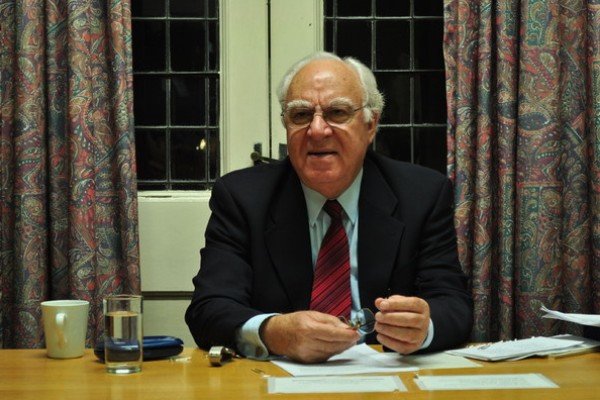
 

Professor Farhang Jahanpour, Oxford University and TFF Board member


Some of Pompeo’s intolerable conditions

1) Pompeo demands that: “First, Iran must declare to the IAEA full account of prior military dimension of its nuclear programme, and permanently and verifiably abandon such work in perpetuity”.

This is something that was pursued under PMU or Possible Military Use during the talks. The IAEA studied all those allegations, including taking soil samples from Parchin military base where the Israelis had claimed that nuclear activity had been conducted. The IAEA decided that there had been “no diversion” of nuclear material for military use.

Iran has agreed to abandon work on nuclear weapons in perpetuity, and all the talk about so-called “sunset clauses” is baseless. In addition to being a member of the NPT, Iran has also joined the “Additional Protocol”, which requires continuous, unannounced inspections of all her nuclear sites, and she has also given an undertaking never to produce nuclear weapons.

The prohibitions do not stop at the end of the “sunset clauses”, but will continue in perpetuity.

The IAEA that is the only legal body in charge of monitoring the deal has, on eleven separate occasions, certified that Iran has fully complied with the terms of the deal.

2) “Second, Iran must stop enrichment and never pursue plutonium reprocessing. This includes closing its heavy water reactor.”

Demanding that Iran should stop enrichment goes against NPT rules. As for “never pursuing plutonium reprocessing”, this is precisely what Iran has agreed to do under the JCPOA, and has destroyed her heavy water reactor.

3) “Third, Iran must also provide to the IAEA full unqualified access to all sites throughout the entire country.”

This is again another provision of the JCPOA, which the IAEA has used on many occasions.


4) “Iran must end its proliferation of ballistic missiles and halt the launching or development of nuclear-capable missiles.”

This is yet another misleading and illegal demand. Like any other country, Iran has the right to defend herself (UN Chater Art 51) and as she is unable to acquire advanced military equipment that the United States has readily sold to all Iranian neighbours, Iran’s missiles are her only means of deterring a military aggression.

Iran does not have intercontinental ballistic missiles as she has limited the range of her missiles to 2,000 kilometres. They are not designed to carry nuclear weapons, and in any case Iran does not have nuclear warheads.


5) Pompeo accused Iran of spreading terrorism in Syria, Iraq, Yemen, etc.

Iran has been fighting against ISIS and other terrorists in Iraq and Syria at the invitation of the governments of those countries. It is up to the Syrian government to ask Iran to withdraw her forces from that country, not for a US Secretary of State to dictate to other countries what they should and should not do.

All experts agree that the mantra of “Iran-backed Houthis” is exaggerated propaganda, as Iran’s contacts with the Houthis and influence over them is minimal.

It is Saudi Arabia and members of her coalition who, with American support, have been bombing Yemen, killing and wounding tens of thousands of innocent people and creating the world’s greatest humanitarian catastrophe there.


What this is really about: Obsession with revenge and regime change

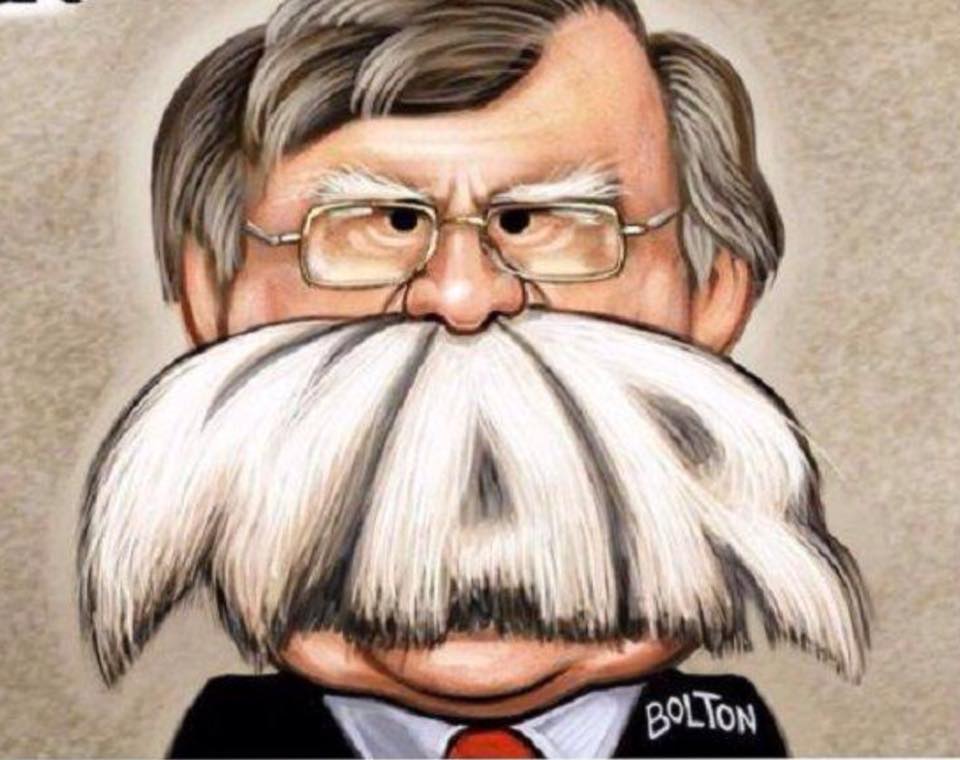
President Trump and his three senior officials, Mike Pompeo, John Bolton and Rudy Giuliani, seem to be preparing the ground for a disastrous war with Iran.

Their hostility towards Iran does not seem to have anything to do with Iran’s nuclear programme, but has everything to do with an obsession for regime change.

Speaking at the Aspen Security Forum, Mike Pompeo boasted that “one of the first things the President did is to go build a coalition of [Persian] Gulf states and Israel to help find a platform which could uniformly push back against Iranian expansionism.”(1)

When he was still a member of Congress in 2016, Pompeo called for action to “change Iranian behaviour, and, ultimately, Iranian regime.” (2)

In the past, he has called for strikes on Iranian nuclear facilities.(3)

Some of his hostility towards Iran seems to have been based on his hatred of Islam. In 2015, Pompeo, then a Congressman, attacked Barack Obama, who, according to him, took the side of the “Islamic East” in its conflict with the “Christian West”. “Every time there has been a conflict between the Christian West and the Islamic East, the data points all point to a single direction,” he said.

Some of his hostility towards Iran seems to have been based on his hatred of Islam. In 2015, Pompeo, then a Congressman, attacked Barack Obama, who, according to him, took the side of the “Islamic East” in its conflict with the “Christian West”. “Every time there has been a conflict between the Christian West and the Islamic East, the data points all point to a single direction,” he said. (4)

John Bolton is another strong advocate of regime change in Iran.

In an op-ed for the Wall Street Journal on 15 January 2018, entitled “Beyond the Iran Nuclear Deal: US policy should be to end the Islamic Republic before its 40th anniversary”, Bolton condemned the 2015 nuclear deal with Iran as a “massive strategic blunder.”

However, he went on to say that American policy, “should be ending Iran’s 1979 Islamic Revolution before its fortieth anniversary.”

He continued: “Recognizing a new Iranian regime in 2019 would reverse the shame of once seeing our diplomats held hostage for four hundred and forty-four days. The former hostages can cut the ribbon to open the new U.S. Embassy in Tehran.” (5)

The former Mayor of New York, Rudy Giuliani, who is now a member of Trump’s legal team has also been a fervent advocate of regime change in Iran.

Speaking at a conference of the terrorist, cultish group, the Mojahedin-e Khalq Organisation, in Washington on 5 May 2018, Rudy Giuliani openly said that Washington’s policy was regime change in Iran, and he even promised that next year they would celebrate the event in Tehran. (6)

This obsession with the past and a deliberate decision to bring about a regime change in Iran will have incalculable costs.

Let’s not forget that prior to Iraq war, Paul Wolfowitz, one of the authors of that war, predicted that it would be a “cake walk”, that it “would pay for itself”, and that “US forces would be welcomed with roses”.

Fifteen years after that disastrous war, American forces are still operating in that country, and the war which has cost trillions of dollars to US taxpayers has killed and wounded millions of innocent Iraqi people, shattered that country and has given rise to a number of vicious terrorist movements.

It should be clear to everyone who is familiar with the Middle East that a war against Iran will not be like Iraq, it will be much worse. It will kill hundreds of thousands of innocent people, will set the Middle East on fire and will do a great damage to Israel and other US allies that she seemingly wishes to support.

During his confirmation hearing at the US Senate, Mike Pompeo was asked if Russia was a unique country. He replied: “This [US] is a unique, exceptional country. Russia is unique, but not exceptional.” (7)

This kind of aggressive, bullying, threatening, demanding and illegal language has not been heard from a responsible government official since before the Second World War.

The concept of Americans being unique and exceptional and almost chosen by God, and referring to other nations as inferior, in the way that President Trump referred to the Latinos as animals, is not far removed from the concept of a superior race and Der Untermensch, or subhuman people.

If we wish to avoid the horrors of the Second World, we must put an end to this kind of arrogant mentality.

It is time for the Europeans, for all the peace-loving Americans and for millions of concerned people across the world who will be paying the cost of this misadventure to stop this madness before it is too late.

Notes

1. Aspen Security Forum, The View from Langley, July 20, 2017.

2. “Rep. Mike Pompeo: One year later, Obama’s Iran nuclear deal puts us at increased risk”, Fox News Opinion, July 14, 2016.

3. Raphael Ahren, “With anti-Iran, pro-Israel stances, Pompeo may become Jerusalem’s new darling”, The Times of Israel, 14 March 2018.

4. Peter Beinart, “Mike Pompeo at State Would Enable Trump’s Worst Instincts”, The Atlantic, Nov 30, 2017.

5. “Beyond the Iran Nuclear Deal: US policy should be to end the Islamic Republic before its 40th anniversary”, Wall Street Journal, Jan 15, 2018.

6. “Rudy Giuliani speaks at Iran Freedom Convention”, CBSN, May 5, 2018.

7. USA: ‘US exceptional, Russia is not’ – Trump’s Sec of State pick Pompeo on YouTube here.


Related Posts

Johan Galtung 1930-2024October 2015 Published here on October 3, 2026 Let us focus on Civilization for conflict analysis and remedies. Major forms of disorder use violence; war is state organized violence. The most belligerent states are the United States of America and Israel, both with civilization roots. National Evangelism, the US Protestant Christian civilization– more national than evangelical–justifies US warfare as exceptionalism of a people chosen by God, with a manifest destiny to run the world. Orthodox Judaism justifies Israeli warfare to conquer and expand from Nile to Euphrates as a religious right and duty to the Eternal One. The third most belligerent country, the UK, no longer believes it is God-chosen but chosen by the USA; not quite the same but something. But the root cause of global disorder lies in the Occident–with Islam–seeing itself as the single, universal civilization valid for all at all times, all others being...
Jan ObergPhD, director, The Transnational Foundation for Peace and Future Research, TFFLund, Sweden October 2, 2026 This is my full original manuscript. The Chinese Academy of Social Science, CASS, makes two publications out if it. 1. China’s Five-year plan emphasized the capabilities of basic research and original innovation. It is regarded as the goal of the future social development, which, as required, should be significantly enhanced. Can you comment on the importance of original innovation in research and academic study? I believe it is easier to define “original innovation” in the natural sciences than in social sciences. The breaking points of what constitutes something new, or innovative, are not quite as sharp in the latter. But in both fields it is about opening up something that was closed, unseen, unexplored before – making manifest what was earlier latent. Innovations come in many forms and shapes – naming something that was not...
The agreement is catastrophic both because of what it says and what it doesn’t mention. It reduces further the major asset of security policies: Freedom of action. Jan Oberg TFF director September 25, 2026 A couple of hours before the agreement was signed on September 22, 2026, I published the following 13 hypotheses about what it would most likely contain on TFF Substack (in English). I was wrong on only the first point. Contrary to what Trump had written on his Truth Social platform, it does not appear to come into force immediately. In fact, it turned out to be worse than even I had anticipated. After these hypotheses now come a number of reflections in light of what the agreement actually contains, and does not contain, as well as the way in which it has generally been presented by major media outlets and by the public-service broadcaster DR. My...

Recent Articles

Tony Robinson October 4, 2026 Violence is easy to recognise when someone is being beaten, shot or killed. It becomes more difficult when nobody is holding a weapon. Poverty, discrimination, exploitation and repression can restrict a human life just as effectively, although they do so in very different ways and with very different consequences. Simply adding more categories to an ever-growing list of forms of violence does not really solve the problem. The more interesting question is what all these different situations have in common and why it makes sense to describe them using the same word. Human beings do not simply react to what happens around them. They remember the past, imagine things that do not yet exist, make plans and undertake projects. Workers organise because they imagine different working conditions; people migrate because they imagine another life somewhere else; social movements emerge because people refuse to accept the...
It’s a matter of principles, courage, vision and pulling together – while the militarist world is falling apart… Peter Langille October 3, 2026 “Here, then, is the problem which we present to you, stark and dreadful and inescapable: Shall we put an end to the human race; or shall mankind renounce war?”The Bertrand Russell—Albert Einstein Manifesto, July 9, 1955 ⁕ The forecast for what’s ahead is worrisome. The sharp rise in armed conflicts over the past three years is adding to what was already the highest level in over seventy years. Genocides, which should be prevented are supported. A shared climate emergency that jeopardises survival is ignored. Diverse polls now suggest that people are war-weary, worried and interested in a more effective United Nations. And, there are viable policy options for a more secure world! Yet governments are doubling-down, betting on more war and investing heavily. If current trends persist,...
Johan Galtung 1930-2024October 2015 Published here on October 3, 2026 Let us focus on Civilization for conflict analysis and remedies. Major forms of disorder use violence; war is state organized violence. The most belligerent states are the United States of America and Israel, both with civilization roots. National Evangelism, the US Protestant Christian civilization– more national than evangelical–justifies US warfare as exceptionalism of a people chosen by God, with a manifest destiny to run the world. Orthodox Judaism justifies Israeli warfare to conquer and expand from Nile to Euphrates as a religious right and duty to the Eternal One. The third most belligerent country, the UK, no longer believes it is God-chosen but chosen by the USA; not quite the same but something. But the root cause of global disorder lies in the Occident–with Islam–seeing itself as the single, universal civilization valid for all at all times, all others being...

TFF on Substack

Discover and subscribe to more peace materials on TFF Substack

Most Popular

Tony Robinson October 4, 2026 Violence is easy to recognise when someone is being beaten, shot or killed. It becomes more difficult when nobody is holding a weapon. Poverty, discrimination, exploitation and repression can restrict a human life just as effectively, although they do so in very different ways and with very different consequences. Simply adding more categories to an ever-growing list of forms of violence does not really solve the problem. The more interesting question is what all these different situations have in common and why it makes sense to describe them using the same word. Human beings do not simply react to what happens around them. They remember the past, imagine things that do not yet exist, make plans and undertake projects. Workers organise because they imagine different working conditions; people migrate because they imagine another life somewhere else; social movements emerge because people refuse to accept the...
It’s a matter of principles, courage, vision and pulling together – while the militarist world is falling apart… Peter Langille October 3, 2026 “Here, then, is the problem which we present to you, stark and dreadful and inescapable: Shall we put an end to the human race; or shall mankind renounce war?”The Bertrand Russell—Albert Einstein Manifesto, July 9, 1955 ⁕ The forecast for what’s ahead is worrisome. The sharp rise in armed conflicts over the past three years is adding to what was already the highest level in over seventy years. Genocides, which should be prevented are supported. A shared climate emergency that jeopardises survival is ignored. Diverse polls now suggest that people are war-weary, worried and interested in a more effective United Nations. And, there are viable policy options for a more secure world! Yet governments are doubling-down, betting on more war and investing heavily. If current trends persist,...
Johan Galtung 1930-2024October 2015 Published here on October 3, 2026 Let us focus on Civilization for conflict analysis and remedies. Major forms of disorder use violence; war is state organized violence. The most belligerent states are the United States of America and Israel, both with civilization roots. National Evangelism, the US Protestant Christian civilization– more national than evangelical–justifies US warfare as exceptionalism of a people chosen by God, with a manifest destiny to run the world. Orthodox Judaism justifies Israeli warfare to conquer and expand from Nile to Euphrates as a religious right and duty to the Eternal One. The third most belligerent country, the UK, no longer believes it is God-chosen but chosen by the USA; not quite the same but something. But the root cause of global disorder lies in the Occident–with Islam–seeing itself as the single, universal civilization valid for all at all times, all others being...
Read More
Living-Peace-Sign-Budapest-copy
Tony Robinson October 4, 2026 Violence is easy to recognise when someone is being beaten, shot or killed. It becomes more difficult when nobody is holding a weapon. Poverty, discrimination, exploitation and repression can restrict a human life just as effectively, although they do so in very different ways and with very different consequences. Simply adding more categories to an ever-growing list of forms of violence does not really solve the problem. The more interesting question is what all these different situations have in common and why it makes sense to describe them using the same word. Human beings do not simply react to what happens around them. They remember the past, imagine things that do not yet exist, make plans and undertake projects. Workers organise because they imagine different working conditions; people migrate because they imagine another life somewhere else; social movements emerge because people refuse to accept the...
b54a1f10-8c65-4f0b-9dd5-4abc0a7d04cc_2659x2659
It’s a matter of principles, courage, vision and pulling together – while the militarist world is falling apart… Peter Langille October 3, 2026 “Here, then, is the problem which we present to you, stark and dreadful and inescapable: Shall we put an end to the human race; or shall mankind renounce war?”The Bertrand Russell—Albert Einstein Manifesto, July 9, 1955 ⁕ The forecast for what’s ahead is worrisome. The sharp rise in armed conflicts over the past three years is adding to what was already the highest level in over seventy years. Genocides, which should be prevented are supported. A shared climate emergency that jeopardises survival is ignored. Diverse polls now suggest that people are war-weary, worried and interested in a more effective United Nations. And, there are viable policy options for a more secure world! Yet governments are doubling-down, betting on more war and investing heavily. If current trends persist,...
010
Johan Galtung 1930-2024October 2015 Published here on October 3, 2026 Let us focus on Civilization for conflict analysis and remedies. Major forms of disorder use violence; war is state organized violence. The most belligerent states are the United States of America and Israel, both with civilization roots. National Evangelism, the US Protestant Christian civilization– more national than evangelical–justifies US warfare as exceptionalism of a people chosen by God, with a manifest destiny to run the world. Orthodox Judaism justifies Israeli warfare to conquer and expand from Nile to Euphrates as a religious right and duty to the Eternal One. The third most belligerent country, the UK, no longer believes it is God-chosen but chosen by the USA; not quite the same but something. But the root cause of global disorder lies in the Occident–with Islam–seeing itself as the single, universal civilization valid for all at all times, all others being...
Screenshot 2026-10-02 011738
Jan ObergPhD, director, The Transnational Foundation for Peace and Future Research, TFFLund, Sweden October 2, 2026 This is my full original manuscript. The Chinese Academy of Social Science, CASS, makes two publications out if it. 1. China’s Five-year plan emphasized the capabilities of basic research and original innovation. It is regarded as the goal of the future social development, which, as required, should be significantly enhanced. Can you comment on the importance of original innovation in research and academic study? I believe it is easier to define “original innovation” in the natural sciences than in social sciences. The breaking points of what constitutes something new, or innovative, are not quite as sharp in the latter. But in both fields it is about opening up something that was closed, unseen, unexplored before – making manifest what was earlier latent. Innovations come in many forms and shapes – naming something that was not...
arctic-circle-map
The agreement is catastrophic both because of what it says and what it doesn’t mention. It reduces further the major asset of security policies: Freedom of action. Jan Oberg TFF director September 25, 2026 A couple of hours before the agreement was signed on September 22, 2026, I published the following 13 hypotheses about what it would most likely contain on TFF Substack (in English). I was wrong on only the first point. Contrary to what Trump had written on his Truth Social platform, it does not appear to come into force immediately. In fact, it turned out to be worse than even I had anticipated. After these hypotheses now come a number of reflections in light of what the agreement actually contains, and does not contain, as well as the way in which it has generally been presented by major media outlets and by the public-service broadcaster DR. My...
girl-5894831_1280
Below are TFF-related media mentions, comments, videos and social media posts published elsewhere but not on this homepage. We happen to catch and list only a fraction. Regarding video comments and debates, we recommend that you go to the TFF Video Channel on Substack where many of them are reproduced. Jan Oberg is a contributor to China Daily – 52 million daily clicks – and Global Times, CGTN and CCTV (the national television), China Investment, Xinhua News Agency and several others. Articles and videos on these media very often multiply into countless Chinese (and Western media) that re-post them from these main media. Thanks to The China Academy, his analyses, interviews and comments are frequently posted on YouTube channels such as Thinkers Forum and Wave Media. These videos are often re-posted on Bilibili (China’s YouTube), the China Content Center on TikTok, and on the Chinese edition of TikTok, Douyin.com. This means reaching hundreds of millions of viewers worldwide over a year. While there are too many to catch on all these...





