
Expansion, Sanctions, and Opposition-Promotion: The West’s Failed Russian Transformation Strategy


By Gordon M. Hahn

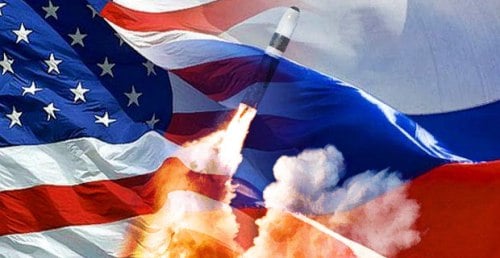
The US and the rest of the West continue to carry out the same failed Russia policy that let to the ‘new Cold War. That policy can be summed up in the following words: We, with our NATO and EU expansion, will ignore your interests and national security concerns; you must follow our model immediately or feel our wrath.

Beginning in the 1990s a Western expansion model’ — NATO and EU expansion without Russia — drove Moscow to retrench on democracy and establish a soft authoritarian regime and led inevitably to the Ukrainian conflict and ‘new cold war.’

Originally published at Gordon Hahn’s website here

The new cold war – for now limited in its hot sphere to proxy wars in Ukraine and Syria – has led to a doubling down on this failed Western approach by continuously intensifying sanctions and backing Russian opposition movements while simultaneously trying to isolate Moscow in the international arena.

These three policies are self-defeating failures, which only consolidate Russian society around Russian President Vladimir Putin and his soft authoritarian system, regardless of social discontent over official corruption, arrogance, and arbitrary rule.

The Western expansion model — subordinating Russia to an appendage of the West with nothing worthy to contribute either to Western security, economies, society or culture – and requiring Moscow to democratize and marketize discredited Russian democrats and led directly to Russia’s retrenchment from Westernization.

Moscow was told it must conform immediately to ostensibly superior standards or be isolated and punished. It must accept NATO and EU expansion regardless of there deleterious effect of these Western policies on Russian interests.

Russia’s retrenchment and continuing Western expansion led inevitably to the Ukrainian crisis and new cold war, as Moscow will never tolerate NATO on the longest section of Russia’s Western border and on Crimea in the Black Sea unless it is implemented by force, i.e. war.

The West responded to Russia’s resistance to Western expansion with democracy-promotion, regime change, and color revolutions in Russia and across Eurasia and among Russian allies and more recently in the wake of the Ukrainian crisis economic sanctions and an attempt to isolate Russia internationally.

Escalating the very approach that has led to the crisis in Russian-Western relations and thus exacerbating that very crisis now unfortunately labeled the ‘new cold war.’


Democracy-promotion, which is essentially opposition-promotion, targets Putin and his regime from below. That democracy-promotion is promotion of the political opposition and revolution-like political change is evident from recent histories in Serbia, Georgia, Kyrgyzstan, and Ukraine.

Virtually nowhere has democracy-promotion led to evolutionary change.

This fact cannot be lost on the Kremlin and the leaderships in other post-Soviet and post-communist states. They inevitably begin to see democracy-promotion as revolution-promotion, and revolutions, as history teaches us, are messy things that can lead anywhere once triggered.

The Kremlin, given a centuries-long history of domestic opposition allying with external foes, is especially sensitive to opposition-promotion; hence, moves such as the foreign agent law and much else.

If democratic opposition-oriented figures well-networked in Washington and working for US-funded Moscow-based think tanks, like Carnegie Moscow Center scholar Aleksandr Baunov, consider it only “unlikely” that Western governments are “directly” financing opposition leader Alexei Navalnyi (https://echo.msk.ru/programs/personalno/2121930-echo/), then many other Russian democrats, not to mention Russians of other stripes, such as Vladimir Putin, know that they are doing so at least indirectly. And they are almost certainly correct in thinking so.

The West’s post-Ukraine crisis sanction meanwhile are intended to undermine the regime from above.

The hope in Washington and Brussels is that by pressuring state and private oligarchs close to Putin or the Kremlin, some may withdraw their support and seek either to remove Putin in a coup or join the opposition and remove him in a revolution or force him negotiate his way out of power safely. In short, the West’s sanctions seek to alienate part of Russian elite and cause an elite or regime split.

The effort to target the regime from above and below in this way is rooted in Western political science’s regime transformation or democratic transition theory — revolution-making in practice. Rulers are more likely to be overthrown or negotiate their regime’s transformation into a democracy if the societal opposition to the regime is strong and the regime’s ruling group or groups split, with some defecting to the opposition and thereby strengthening it.

Opposition from above and below can be further mobilized by isolating Russia internationally.

While the West’s goals in Russia of mobilizing opposition through democracy-promotion and causing a regime split through sanctions are rarely, if ever acknowledged by Western leaders, in the wake of the Ukrainian crisis Western leaders openly declared their desire to isolate Moscow internationally. Sanctions were part of this strategy.

The hope was to isolate Russia economically and diplomatically. The former, by causing economic and business dislocation, would fuel opposition anger below to, and official disenchantment above with Putin. The latter, diplomatic isolation, would reduce Putin’s stature at home, where his anti-Western policies earn him respect among non-Western leaders and exaggerated claims of success in ‘undermining Western values’ and ‘recreating the Russian empire’ in the West.

These policies have achieved no success in the past and are unlikely to do so in the future.

Nether the Russian people nor any section of the core Russian elite is ready to overthrow Putin. Russia’s soft authoritarian regime is effective in that it avoids provoking society to revolution. It represses selectively, almost surgically and rewards more broadly.

Therefore, Putin is still highly popular outside of Moscow and St. Petersburg and is sufficiently popular in those two key cities. Except there, youth remain highly apolitical.

The regime is unlikely to be shaken until 2024 when Putin cannot run for the presidency constitutionally, and the Russian people will be likely tired of him, Medvedev, and any other face Putin is likely to designate as his preferred successor.

The Russian economy is on the rebound, so there is little economic motive to rebel.

Indeed, Russia continues to register high levels of ‘life satisfaction’ and happiness in opinion surveys and academic studies. Frustration over regime corruption and bureaucratic arbitrariness do not translate into disdain for Putin outside the intelligentsia.

The effort to isolate Russia failed miserably. It is impossible for the West, in fact, to isolate Russia internationally.

China, the world’s largest market and rising counter-power to Western dominance, is a Russian ally, perhaps its closest. Russia remains a member of the G20 and a leading member of BRICS, the Shanghai Cooperation Organization and the Eurasian Economic Union.

The latter two are rapidly expanding international organizations that seek protection from Western dominance rather than seeking Russian isolation. Foreign direct investment into Russia is rebounding to growth-sustaining levels. Moscow was able to convince Saudi Arabia, an ostensible US ally, to cut oil production, thus raising prices and saving the Kremlin from an election year budget crisis. The US recently purchased and received its first party of Russian LNG.

Isolation this is not.

The Putin regime remains united, not least of all against the West’s antagonistic attitude towards Russia, exemplified in stark terms by the Russophobia unleashed with the Russiagate hysteria in the West.

Liberal commentator Nikolai Svanidze outlined how the US government’s overly antagonistic policies consolidate Putin’s soft authoritarianism. Commenting on Chechnya’s arrest of the Chechen branch of the human rights organization ‘Memorial’, he noted: “It would be good if this story would not be politicized in general and abroad as well. Because when there, let’s say an international human rights ombudsman talks about this and calls for the release of Titiev, that’s one thing. When the US State Department talks about this, it means, knowing our reaction, that Titiev’s situation will only worsen, because of the bad relations between our countries. And every such similar remark….has the opposite result completely” (https://echo.msk.ru/programs/personalno/2127140-echo/).

Even many anti-Putin Russian liberals are appalled by the image of Russia being portrayed in the West, as Oleg Kashin’s oped in the New York Times showed.. In short, as I have written elsewhere: It is not “Putin’s Russia” but “Russia’s Putin.”

Western policy has alienated Russia and Russians, and Putin just happens to be the most important of the latter.

Our policy is not “hybrid”, as one Russian commentator recently explained, but rather schizophrenic.

On the one hand, we place the entire Forbes 100 in Russia and then some on a potential sanctions list trying to split the regime, while seeking Russian compromises or assistance in Ukraine, Syria, Iran, North Korea, the Israeli-Palestinian conflict.

What is needed is a policy of ‘real engagement’ with Moscow, the end of NATO expansion, and a willingness among NATO and the EU to admit their sad role in the making of the Ukrainian and Syrian crises.

Among other things, we must challenge increasingly ultra-nationalist Kiev to negotiate with the Donbas rebels and convene a truly international conference to resolve the Syrian crisis and the Kurdish question.

Unfortunately, American hubris and revolutionism and the NATO and EU bureaucracies will have nothing of such a realist policy.

~~~

About the Author

Gordon M. Hahn, Ph.D., is a Senior Researcher at the Center for Terrorism and Intelligence Studies (CETIS), Akribis Group, San Jose, California, www.cetisresearch.org; an expert analyst at Corr Analytics, www.canalyt.com; and an analyst at Geostrategic Forecasting Corporation (Chicago), www.geostrategicforecasting.com. 

Dr. Hahn is the author of the recently published Ukraine Over the Edge: Russia, the West, and the ‘New Cold War (McFarland Publishers, 2017) as well as three previously published and well-received books: Russia’s Revolution From Above: Reform, Transition and Revolution in the Fall of the Soviet Communist Regime, 1985-2000 (Transaction Publishers, 2002);  Russia’s Islamic Threat (Yale University Press, 2007); and The Caucasus Emirate Mujahedin: Global Jihadism in Russia’s North Caucasus and Beyond (McFarland Publishers, 2014).

He has published numerous think tank reports, academic articles, analyses, and commentaries in both English and Russian language media and has served as a consultant and provided expert testimony to the U.S. government. 

Dr. Hahn also has taught at Boston, American, Stanford, San Jose State, and San Francisco State Universities and as a Fulbright Scholar at Saint Petersburg State University, Russia. He has been a senior associate and visiting fellow at the Center for Strategic and International Studies and the Kennan Institute in Washington DC as well as the Hoover Institution at Stanford University.


2 Responses

  1. Very good. As it looks now, we can only cross fingers. Westerners need to understand that USA is on its way out. No real production, with a huge debt and enormous political problems . Russia’s Putin is not easy to beat. If another leader came and opened up to Nato and Western input – one can only be afraid of that Idea. Lot of new fights to grab Russia’s wealth and undermine its stability.

  2. “Russia’s retrenchment and continuing Western expansion led inevitably to the Ukrainian crisis and new cold war, ” Excuse me, who is expanding? who overthrew the Ukrainian government and installed Poroshenko? Who are you pretending is promoting democracy? The USA is by far the greatest invader and régime-changer in the world today. As for soft authoritarian- who are you to decide for the Russians, when the USA has so many “elected” lawmakers who do nothing for the people except help the rich get richer and allow the poor to be killed by police or gun-toting white supremacists?

Related Posts

Jan Oberg, TFF director April 9, 2026 I was recently invited to have a good, long talk about the world – and, of course, about peace too – with Boris Malagurski on his Weight of Chains Channel on YouTube. It was a real joy and seems to have been greatly appreciated by the viewers too. Mr Malagurski and I shall of course be grateful if you share this conversation in your circles – of course, only if you like what you see and hear 😉☮️ And remember that this one – like hundreds of others with TFF Associates – can be enjoyed at our TFF Video Collection.
A friendly quarrel while we agree that the US sanctions are a weapon of mass destruction and kill more people than wars do. And that we must talk much more about sanctions than we have so far. Jan Oberg, TFF director March 16, 2026 John Mearsheimer recently stated that U.S. sanctions murdered around 38 million people between 1971 and 2021 – see the video below. It is a dramatic figure, and it has spread quickly because it captures, in one sentence, the enormous human cost of modern sanctions. I share his concern about the destructive effects of economic coercion. But the specific number he cites — and the way he attributes it — deserves a friendly academic clarification. The figure comes from a 2023 Lancet Global Health article estimating the mortality effects of unilateral U.S. and EU sanctions over the past half‑century. This is the first point where Mearsheimer’s shorthand diverges from the text: the study...
By Jan ObergTFF co-founder and director February 11, 2026 PART 3 — ECONOMICS, TRADE & FINANCIAL SOVEREIGNTY A. Trade Measures & Market Signaling Economic pressure can be applied instantly and scaled without violence. Immediate Measures (within a week) Government boycott US goods and services  A very powerful signal which over time will be felt. Targeted tariffs on selected U.S. goods Symbolic but high-visibility sectors send a clear message. Suspend trade facilitation talks A peaceful pause that signals deep concern. Freeze U.S. participation in public procurement – military procurement in particular A nonviolent way to reduce influence. Competition law review of U.S. corporations A legal tool to scrutinise market dominance. Longer-Term Measures EU–Asia–Africa trade corridors Reducing reliance on U.S. markets. European supply chains for critical minerals Strategic autonomy in resource access. European Strategic Trade Authority Monitoring coercive practices globally. Euro-denominated commodity markets Weakening the dollar’s pricing monopoly. The EU must resume contacts and negotiations with Russia, focusing on energy cooperation To...

Recent Articles

Tony Robinson October 4, 2026 Violence is easy to recognise when someone is being beaten, shot or killed. It becomes more difficult when nobody is holding a weapon. Poverty, discrimination, exploitation and repression can restrict a human life just as effectively, although they do so in very different ways and with very different consequences. Simply adding more categories to an ever-growing list of forms of violence does not really solve the problem. The more interesting question is what all these different situations have in common and why it makes sense to describe them using the same word. Human beings do not simply react to what happens around them. They remember the past, imagine things that do not yet exist, make plans and undertake projects. Workers organise because they imagine different working conditions; people migrate because they imagine another life somewhere else; social movements emerge because people refuse to accept the...
It’s a matter of principles, courage, vision and pulling together – while the militarist world is falling apart… Peter Langille October 3, 2026 “Here, then, is the problem which we present to you, stark and dreadful and inescapable: Shall we put an end to the human race; or shall mankind renounce war?”The Bertrand Russell—Albert Einstein Manifesto, July 9, 1955 ⁕ The forecast for what’s ahead is worrisome. The sharp rise in armed conflicts over the past three years is adding to what was already the highest level in over seventy years. Genocides, which should be prevented are supported. A shared climate emergency that jeopardises survival is ignored. Diverse polls now suggest that people are war-weary, worried and interested in a more effective United Nations. And, there are viable policy options for a more secure world! Yet governments are doubling-down, betting on more war and investing heavily. If current trends persist,...
Johan Galtung 1930-2024October 2015 Published here on October 3, 2026 Let us focus on Civilization for conflict analysis and remedies. Major forms of disorder use violence; war is state organized violence. The most belligerent states are the United States of America and Israel, both with civilization roots. National Evangelism, the US Protestant Christian civilization– more national than evangelical–justifies US warfare as exceptionalism of a people chosen by God, with a manifest destiny to run the world. Orthodox Judaism justifies Israeli warfare to conquer and expand from Nile to Euphrates as a religious right and duty to the Eternal One. The third most belligerent country, the UK, no longer believes it is God-chosen but chosen by the USA; not quite the same but something. But the root cause of global disorder lies in the Occident–with Islam–seeing itself as the single, universal civilization valid for all at all times, all others being...

TFF on Substack

Discover and subscribe to more peace materials on TFF Substack

Most Popular

Tony Robinson October 4, 2026 Violence is easy to recognise when someone is being beaten, shot or killed. It becomes more difficult when nobody is holding a weapon. Poverty, discrimination, exploitation and repression can restrict a human life just as effectively, although they do so in very different ways and with very different consequences. Simply adding more categories to an ever-growing list of forms of violence does not really solve the problem. The more interesting question is what all these different situations have in common and why it makes sense to describe them using the same word. Human beings do not simply react to what happens around them. They remember the past, imagine things that do not yet exist, make plans and undertake projects. Workers organise because they imagine different working conditions; people migrate because they imagine another life somewhere else; social movements emerge because people refuse to accept the...
It’s a matter of principles, courage, vision and pulling together – while the militarist world is falling apart… Peter Langille October 3, 2026 “Here, then, is the problem which we present to you, stark and dreadful and inescapable: Shall we put an end to the human race; or shall mankind renounce war?”The Bertrand Russell—Albert Einstein Manifesto, July 9, 1955 ⁕ The forecast for what’s ahead is worrisome. The sharp rise in armed conflicts over the past three years is adding to what was already the highest level in over seventy years. Genocides, which should be prevented are supported. A shared climate emergency that jeopardises survival is ignored. Diverse polls now suggest that people are war-weary, worried and interested in a more effective United Nations. And, there are viable policy options for a more secure world! Yet governments are doubling-down, betting on more war and investing heavily. If current trends persist,...
Johan Galtung 1930-2024October 2015 Published here on October 3, 2026 Let us focus on Civilization for conflict analysis and remedies. Major forms of disorder use violence; war is state organized violence. The most belligerent states are the United States of America and Israel, both with civilization roots. National Evangelism, the US Protestant Christian civilization– more national than evangelical–justifies US warfare as exceptionalism of a people chosen by God, with a manifest destiny to run the world. Orthodox Judaism justifies Israeli warfare to conquer and expand from Nile to Euphrates as a religious right and duty to the Eternal One. The third most belligerent country, the UK, no longer believes it is God-chosen but chosen by the USA; not quite the same but something. But the root cause of global disorder lies in the Occident–with Islam–seeing itself as the single, universal civilization valid for all at all times, all others being...
Read More
Living-Peace-Sign-Budapest-copy
Tony Robinson October 4, 2026 Violence is easy to recognise when someone is being beaten, shot or killed. It becomes more difficult when nobody is holding a weapon. Poverty, discrimination, exploitation and repression can restrict a human life just as effectively, although they do so in very different ways and with very different consequences. Simply adding more categories to an ever-growing list of forms of violence does not really solve the problem. The more interesting question is what all these different situations have in common and why it makes sense to describe them using the same word. Human beings do not simply react to what happens around them. They remember the past, imagine things that do not yet exist, make plans and undertake projects. Workers organise because they imagine different working conditions; people migrate because they imagine another life somewhere else; social movements emerge because people refuse to accept the...
b54a1f10-8c65-4f0b-9dd5-4abc0a7d04cc_2659x2659
It’s a matter of principles, courage, vision and pulling together – while the militarist world is falling apart… Peter Langille October 3, 2026 “Here, then, is the problem which we present to you, stark and dreadful and inescapable: Shall we put an end to the human race; or shall mankind renounce war?”The Bertrand Russell—Albert Einstein Manifesto, July 9, 1955 ⁕ The forecast for what’s ahead is worrisome. The sharp rise in armed conflicts over the past three years is adding to what was already the highest level in over seventy years. Genocides, which should be prevented are supported. A shared climate emergency that jeopardises survival is ignored. Diverse polls now suggest that people are war-weary, worried and interested in a more effective United Nations. And, there are viable policy options for a more secure world! Yet governments are doubling-down, betting on more war and investing heavily. If current trends persist,...
010
Johan Galtung 1930-2024October 2015 Published here on October 3, 2026 Let us focus on Civilization for conflict analysis and remedies. Major forms of disorder use violence; war is state organized violence. The most belligerent states are the United States of America and Israel, both with civilization roots. National Evangelism, the US Protestant Christian civilization– more national than evangelical–justifies US warfare as exceptionalism of a people chosen by God, with a manifest destiny to run the world. Orthodox Judaism justifies Israeli warfare to conquer and expand from Nile to Euphrates as a religious right and duty to the Eternal One. The third most belligerent country, the UK, no longer believes it is God-chosen but chosen by the USA; not quite the same but something. But the root cause of global disorder lies in the Occident–with Islam–seeing itself as the single, universal civilization valid for all at all times, all others being...
Screenshot 2026-10-02 011738
Jan ObergPhD, director, The Transnational Foundation for Peace and Future Research, TFFLund, Sweden October 2, 2026 This is my full original manuscript. The Chinese Academy of Social Science, CASS, makes two publications out if it. 1. China’s Five-year plan emphasized the capabilities of basic research and original innovation. It is regarded as the goal of the future social development, which, as required, should be significantly enhanced. Can you comment on the importance of original innovation in research and academic study? I believe it is easier to define “original innovation” in the natural sciences than in social sciences. The breaking points of what constitutes something new, or innovative, are not quite as sharp in the latter. But in both fields it is about opening up something that was closed, unseen, unexplored before – making manifest what was earlier latent. Innovations come in many forms and shapes – naming something that was not...
arctic-circle-map
The agreement is catastrophic both because of what it says and what it doesn’t mention. It reduces further the major asset of security policies: Freedom of action. Jan Oberg TFF director September 25, 2026 A couple of hours before the agreement was signed on September 22, 2026, I published the following 13 hypotheses about what it would most likely contain on TFF Substack (in English). I was wrong on only the first point. Contrary to what Trump had written on his Truth Social platform, it does not appear to come into force immediately. In fact, it turned out to be worse than even I had anticipated. After these hypotheses now come a number of reflections in light of what the agreement actually contains, and does not contain, as well as the way in which it has generally been presented by major media outlets and by the public-service broadcaster DR. My...
girl-5894831_1280
Below are TFF-related media mentions, comments, videos and social media posts published elsewhere but not on this homepage. We happen to catch and list only a fraction. Regarding video comments and debates, we recommend that you go to the TFF Video Channel on Substack where many of them are reproduced. Jan Oberg is a contributor to China Daily – 52 million daily clicks – and Global Times, CGTN and CCTV (the national television), China Investment, Xinhua News Agency and several others. Articles and videos on these media very often multiply into countless Chinese (and Western media) that re-post them from these main media. Thanks to The China Academy, his analyses, interviews and comments are frequently posted on YouTube channels such as Thinkers Forum and Wave Media. These videos are often re-posted on Bilibili (China’s YouTube), the China Content Center on TikTok, and on the Chinese edition of TikTok, Douyin.com. This means reaching hundreds of millions of viewers worldwide over a year. While there are too many to catch on all these...



