
The Narrative of Peace: What We Can Learn From the History of Peace Thought


By John Gittings

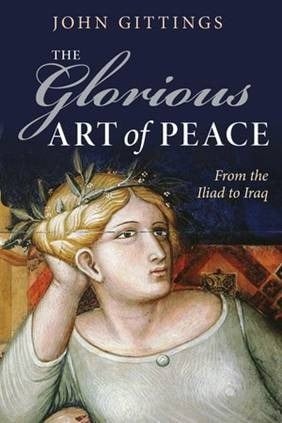
• “Although most people have always sought to live in peace, our perception of the past is over-dominated by a narrative that is obsessed with war”, argues John Gittings – long-standing ORG Adviser and Guardian Writer, in his latest book ‘The Glorious Art of Peace: From the Iliad to Iraq’, published this year by Oxford University Press.

August 2012

In this special article for ORG, based on his book, John Gittings demonstrates that we need to open our minds to an alternative view of history, which acknowledges the strength of the case for peace, as it has been argued from ancient times to the present day.

This rich record of peace thought and argument is not only of great historical interest: It highlights the need to understand that peace is essential for civilisation, and that we must find better ways to educate for peace, to develop more effective forms of negotiation, and to mobilise popular support to work for global peace.

War still has a much higher visibility than peace, in spite of the flourishing of peace studies over the last three to four decades, and many people are unaware that there is a science of peace which is every bit as complex and rich as the science of war. A survey of the shelves any large bookshop or library will illustrate the point: It is much easier to find Sunzi on the Art of War than the thoughts on peace of his Chinese contemporary Mengzi. Machiavelli’s militaristic counsel to The Prince is much more accessible than the pacific advice to another Prince of his Renaissance contemporary Erasmus. Clausewitz’s thoughts On War are more likely to be on the shelves than the reflections On Perpetual Peace by his fellow thinker of the Enlightenment Immanuel Kant. And for a round-up of thinking on peace and war, while the Oxford reader on War (Freedman, ed., 1994) is generally available, the Oxford reader on Approaches to Peace (Barash, ed., 2000), is much less so. Yet, over the last two millennia, there has been a powerful and multi-stranded narrative of peace, expressed in different forms and in different environments, challenging the more familiar dialogue of war. This trajectory of pacific thought is not just of scholarly interest but can still enrich our contemporary debate on how to fashion a more peaceful world. Here I shall trace it (briefly and selectively) from ancient China and Greece, through early Christian thought to the humanist thinkers of the Renaissance, onwards in an increasingly rich dialogue through the Enlightenment into the 19th century when peace became a campaigning issue and the modern peace movement can be said to have emerged. I shall then consider what lessons we can draw from this still under-explored wealth of peace thinking which may continue to be relevant today.


Via oxfordresearchgroup.org.uk

Our journey begins in China during the 4th-3rd century BC – the period of the Warring States which led to the first unification of China (221BC) – when we may listen in on a vigorous debate between scholar-advisers of the different Schools of thought (the so-called Hundred Schools) on the merits of peace and war. The “Legalists” valued military force above all else and claimed that aggression was the best form of defence. The Strategists provided the city-state rulers with strategic and tactical advice, most famously in Sunzi’s Art of War, which is still studied by military commanders this day. Powerful arguments in favour of peace were also made at the court by Confucian and Mohist scholars, though these are less familiar to us today. War is almost always a disaster, they told their rulers, and it inflicts grievous harm on the ordinary people who bear its brunt. In the words of the Confucian scholar Mengzi (Mencius):

In wars to win land, the dead fill the fields; in wars to seize cities, the dead fill their streets. This is what we mean by ‘teaching the earth how to eat human flesh.

– – – – –

Popular anti-war sentiment in the age of modern warfare from the 18th into the 19th century was often drowned out by the sound of drums and the display of scarlet uniforms as princely regimes sought to mobilise the populace for cannon fodder. However, with the spread of literacy and modern communications, the Napoleonic Wars initiated a new awareness of the real horrors of armed – and still mostly hand-to-hand – conflict. 19th century writers such as Stendhal (The Charterhouse of Parma), Thackeray (Vanity Fair), Zola (La Débâcle) and, most famously, Tolstoy in his War and Peace, presented an emphatically anti-heroic view of war. The mass media of the 19th century also began to report, though usually in a form biased in favour of the colonial powers, the popular resistance of many colonised peoples. The full extent of such resistance, which typically began with passive and non-violent disaffection but, when suppressed by violence, was likely to become violent in return, is still not sufficiently recognised. (Richard Gott’s Britain’s Empire: Resistance, repression and revolt, Verso, 2011, fills an important gap in this story). Gandhi is often credited with virtually inventing the concept of non-violent protest, yet it must have been practiced in many thousands of separate incidents in Europe, Africa and Asia for many centuries.

The popular voice for peace, as we are well aware, has become louder and clearer in the last hundred years although it still can be swayed by appeals to patriotism and chauvinism. Yet from ancient times onwards, peace thinkers have recognised that peace is, in the end, about serving the interests of the people, and that peace is more likely to be secured if the people can be rallied to its cause. Although we live today in very different times, the validity of this proposition is not diminished, and we have seen important (though unfortunately not yet sufficient) results from popular activism against war and nuclear weapons. I could conclude this article with a suitable quotation on the subject from one of the great peace advocates of the modern world, such as Jane Addams, Albert Einstein, Bertrand Russell, Joseph Rotblat, Alva Myrdal, Johan Galtung or Kenneth Boulding. Instead, I shall end with a lyric from a popular song of the mid-19th century, often sung in the music-halls of Britain. The singer is a young woman, saying farewell to her lover who is going off to the wars, and the last four lines of her ballad, widely quoted at the time by the advocates of peace, convey a simple and still important truth.

When glory leads the way, you’ll be madly rushing on,

Never thinking if they kill you that my happiness is gone.

If you win the day perhaps, a general you’ll be;

Though I’m proud to think of that, what will become of me!

Oh, if I were Queen of France—or, still better, Pope of Rome,

I would have no fighting men abroad—no weeping maids at home.

All the world should be at peace, or if kings must show their might,

Why, let them who make the quarrel be the only men to fight.

(‘Jeannette’s Song’, c .1848)


Read more…

Our publications are circulated free of charge for non-profit use, but please consider making a donation to ORG, if you are able to do so.

Copyright © Oxford Research Group 2017. Some rights reserved. This publication is licensed under a Creative Commons Attribution-NonCommercial-NoDerivs 3.0 Licence. For more information please visit.


 

Related Posts

Tony Robinson October 4, 2026 Violence is easy to recognise when someone is being beaten, shot or killed. It becomes more difficult when nobody is holding a weapon. Poverty, discrimination, exploitation and repression can restrict a human life just as effectively, although they do so in very different ways and with very different consequences. Simply adding more categories to an ever-growing list of forms of violence does not really solve the problem. The more interesting question is what all these different situations have in common and why it makes sense to describe them using the same word. Human beings do not simply react to what happens around them. They remember the past, imagine things that do not yet exist, make plans and undertake projects. Workers organise because they imagine different working conditions; people migrate because they imagine another life somewhere else; social movements emerge because people refuse to accept the...
It’s a matter of principles, courage, vision and pulling together – while the militarist world is falling apart… Peter Langille October 3, 2026 “Here, then, is the problem which we present to you, stark and dreadful and inescapable: Shall we put an end to the human race; or shall mankind renounce war?”The Bertrand Russell—Albert Einstein Manifesto, July 9, 1955 ⁕ The forecast for what’s ahead is worrisome. The sharp rise in armed conflicts over the past three years is adding to what was already the highest level in over seventy years. Genocides, which should be prevented are supported. A shared climate emergency that jeopardises survival is ignored. Diverse polls now suggest that people are war-weary, worried and interested in a more effective United Nations. And, there are viable policy options for a more secure world! Yet governments are doubling-down, betting on more war and investing heavily. If current trends persist,...
Johan Galtung 1930-2024October 2015 Published here on October 3, 2026 Let us focus on Civilization for conflict analysis and remedies. Major forms of disorder use violence; war is state organized violence. The most belligerent states are the United States of America and Israel, both with civilization roots. National Evangelism, the US Protestant Christian civilization– more national than evangelical–justifies US warfare as exceptionalism of a people chosen by God, with a manifest destiny to run the world. Orthodox Judaism justifies Israeli warfare to conquer and expand from Nile to Euphrates as a religious right and duty to the Eternal One. The third most belligerent country, the UK, no longer believes it is God-chosen but chosen by the USA; not quite the same but something. But the root cause of global disorder lies in the Occident–with Islam–seeing itself as the single, universal civilization valid for all at all times, all others being...

Recent Articles

Tony Robinson October 4, 2026 Violence is easy to recognise when someone is being beaten, shot or killed. It becomes more difficult when nobody is holding a weapon. Poverty, discrimination, exploitation and repression can restrict a human life just as effectively, although they do so in very different ways and with very different consequences. Simply adding more categories to an ever-growing list of forms of violence does not really solve the problem. The more interesting question is what all these different situations have in common and why it makes sense to describe them using the same word. Human beings do not simply react to what happens around them. They remember the past, imagine things that do not yet exist, make plans and undertake projects. Workers organise because they imagine different working conditions; people migrate because they imagine another life somewhere else; social movements emerge because people refuse to accept the...
It’s a matter of principles, courage, vision and pulling together – while the militarist world is falling apart… Peter Langille October 3, 2026 “Here, then, is the problem which we present to you, stark and dreadful and inescapable: Shall we put an end to the human race; or shall mankind renounce war?”The Bertrand Russell—Albert Einstein Manifesto, July 9, 1955 ⁕ The forecast for what’s ahead is worrisome. The sharp rise in armed conflicts over the past three years is adding to what was already the highest level in over seventy years. Genocides, which should be prevented are supported. A shared climate emergency that jeopardises survival is ignored. Diverse polls now suggest that people are war-weary, worried and interested in a more effective United Nations. And, there are viable policy options for a more secure world! Yet governments are doubling-down, betting on more war and investing heavily. If current trends persist,...
Johan Galtung 1930-2024October 2015 Published here on October 3, 2026 Let us focus on Civilization for conflict analysis and remedies. Major forms of disorder use violence; war is state organized violence. The most belligerent states are the United States of America and Israel, both with civilization roots. National Evangelism, the US Protestant Christian civilization– more national than evangelical–justifies US warfare as exceptionalism of a people chosen by God, with a manifest destiny to run the world. Orthodox Judaism justifies Israeli warfare to conquer and expand from Nile to Euphrates as a religious right and duty to the Eternal One. The third most belligerent country, the UK, no longer believes it is God-chosen but chosen by the USA; not quite the same but something. But the root cause of global disorder lies in the Occident–with Islam–seeing itself as the single, universal civilization valid for all at all times, all others being...

TFF on Substack

Discover and subscribe to more peace materials on TFF Substack

Most Popular

Tony Robinson October 4, 2026 Violence is easy to recognise when someone is being beaten, shot or killed. It becomes more difficult when nobody is holding a weapon. Poverty, discrimination, exploitation and repression can restrict a human life just as effectively, although they do so in very different ways and with very different consequences. Simply adding more categories to an ever-growing list of forms of violence does not really solve the problem. The more interesting question is what all these different situations have in common and why it makes sense to describe them using the same word. Human beings do not simply react to what happens around them. They remember the past, imagine things that do not yet exist, make plans and undertake projects. Workers organise because they imagine different working conditions; people migrate because they imagine another life somewhere else; social movements emerge because people refuse to accept the...
It’s a matter of principles, courage, vision and pulling together – while the militarist world is falling apart… Peter Langille October 3, 2026 “Here, then, is the problem which we present to you, stark and dreadful and inescapable: Shall we put an end to the human race; or shall mankind renounce war?”The Bertrand Russell—Albert Einstein Manifesto, July 9, 1955 ⁕ The forecast for what’s ahead is worrisome. The sharp rise in armed conflicts over the past three years is adding to what was already the highest level in over seventy years. Genocides, which should be prevented are supported. A shared climate emergency that jeopardises survival is ignored. Diverse polls now suggest that people are war-weary, worried and interested in a more effective United Nations. And, there are viable policy options for a more secure world! Yet governments are doubling-down, betting on more war and investing heavily. If current trends persist,...
Johan Galtung 1930-2024October 2015 Published here on October 3, 2026 Let us focus on Civilization for conflict analysis and remedies. Major forms of disorder use violence; war is state organized violence. The most belligerent states are the United States of America and Israel, both with civilization roots. National Evangelism, the US Protestant Christian civilization– more national than evangelical–justifies US warfare as exceptionalism of a people chosen by God, with a manifest destiny to run the world. Orthodox Judaism justifies Israeli warfare to conquer and expand from Nile to Euphrates as a religious right and duty to the Eternal One. The third most belligerent country, the UK, no longer believes it is God-chosen but chosen by the USA; not quite the same but something. But the root cause of global disorder lies in the Occident–with Islam–seeing itself as the single, universal civilization valid for all at all times, all others being...
Read More
Living-Peace-Sign-Budapest-copy
Tony Robinson October 4, 2026 Violence is easy to recognise when someone is being beaten, shot or killed. It becomes more difficult when nobody is holding a weapon. Poverty, discrimination, exploitation and repression can restrict a human life just as effectively, although they do so in very different ways and with very different consequences. Simply adding more categories to an ever-growing list of forms of violence does not really solve the problem. The more interesting question is what all these different situations have in common and why it makes sense to describe them using the same word. Human beings do not simply react to what happens around them. They remember the past, imagine things that do not yet exist, make plans and undertake projects. Workers organise because they imagine different working conditions; people migrate because they imagine another life somewhere else; social movements emerge because people refuse to accept the...
b54a1f10-8c65-4f0b-9dd5-4abc0a7d04cc_2659x2659
It’s a matter of principles, courage, vision and pulling together – while the militarist world is falling apart… Peter Langille October 3, 2026 “Here, then, is the problem which we present to you, stark and dreadful and inescapable: Shall we put an end to the human race; or shall mankind renounce war?”The Bertrand Russell—Albert Einstein Manifesto, July 9, 1955 ⁕ The forecast for what’s ahead is worrisome. The sharp rise in armed conflicts over the past three years is adding to what was already the highest level in over seventy years. Genocides, which should be prevented are supported. A shared climate emergency that jeopardises survival is ignored. Diverse polls now suggest that people are war-weary, worried and interested in a more effective United Nations. And, there are viable policy options for a more secure world! Yet governments are doubling-down, betting on more war and investing heavily. If current trends persist,...
010
Johan Galtung 1930-2024October 2015 Published here on October 3, 2026 Let us focus on Civilization for conflict analysis and remedies. Major forms of disorder use violence; war is state organized violence. The most belligerent states are the United States of America and Israel, both with civilization roots. National Evangelism, the US Protestant Christian civilization– more national than evangelical–justifies US warfare as exceptionalism of a people chosen by God, with a manifest destiny to run the world. Orthodox Judaism justifies Israeli warfare to conquer and expand from Nile to Euphrates as a religious right and duty to the Eternal One. The third most belligerent country, the UK, no longer believes it is God-chosen but chosen by the USA; not quite the same but something. But the root cause of global disorder lies in the Occident–with Islam–seeing itself as the single, universal civilization valid for all at all times, all others being...
Screenshot 2026-10-02 011738
Jan ObergPhD, director, The Transnational Foundation for Peace and Future Research, TFFLund, Sweden October 2, 2026 This is my full original manuscript. The Chinese Academy of Social Science, CASS, makes two publications out if it. 1. China’s Five-year plan emphasized the capabilities of basic research and original innovation. It is regarded as the goal of the future social development, which, as required, should be significantly enhanced. Can you comment on the importance of original innovation in research and academic study? I believe it is easier to define “original innovation” in the natural sciences than in social sciences. The breaking points of what constitutes something new, or innovative, are not quite as sharp in the latter. But in both fields it is about opening up something that was closed, unseen, unexplored before – making manifest what was earlier latent. Innovations come in many forms and shapes – naming something that was not...
arctic-circle-map
The agreement is catastrophic both because of what it says and what it doesn’t mention. It reduces further the major asset of security policies: Freedom of action. Jan Oberg TFF director September 25, 2026 A couple of hours before the agreement was signed on September 22, 2026, I published the following 13 hypotheses about what it would most likely contain on TFF Substack (in English). I was wrong on only the first point. Contrary to what Trump had written on his Truth Social platform, it does not appear to come into force immediately. In fact, it turned out to be worse than even I had anticipated. After these hypotheses now come a number of reflections in light of what the agreement actually contains, and does not contain, as well as the way in which it has generally been presented by major media outlets and by the public-service broadcaster DR. My...
girl-5894831_1280
Below are TFF-related media mentions, comments, videos and social media posts published elsewhere but not on this homepage. We happen to catch and list only a fraction. Regarding video comments and debates, we recommend that you go to the TFF Video Channel on Substack where many of them are reproduced. Jan Oberg is a contributor to China Daily – 52 million daily clicks – and Global Times, CGTN and CCTV (the national television), China Investment, Xinhua News Agency and several others. Articles and videos on these media very often multiply into countless Chinese (and Western media) that re-post them from these main media. Thanks to The China Academy, his analyses, interviews and comments are frequently posted on YouTube channels such as Thinkers Forum and Wave Media. These videos are often re-posted on Bilibili (China’s YouTube), the China Content Center on TikTok, and on the Chinese edition of TikTok, Douyin.com. This means reaching hundreds of millions of viewers worldwide over a year. While there are too many to catch on all these...



