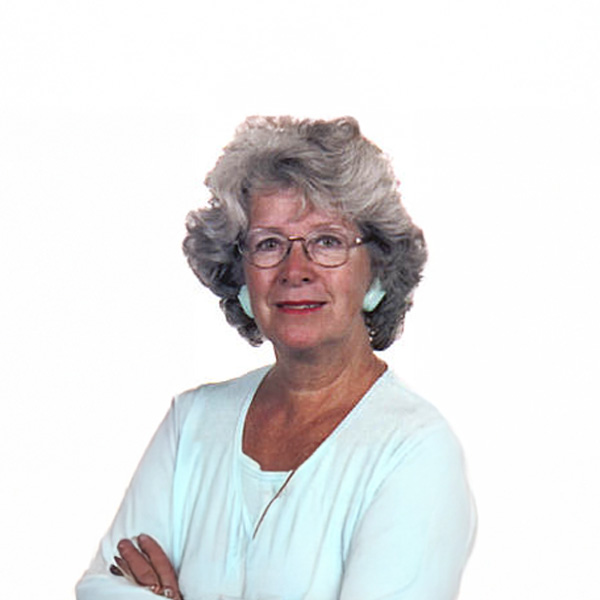
Maj Britt Theorin, former Ambassador
Lecture given at the New Zealand Institute of International Affairs 15/11 2010
To understand why there is such a strong critique in Sweden of the war in Afghanistan, one must look some decades – yes even some centuries back.
Sweden has been out of war for 200 years now. Before 1809 and centuries back Sweden was a conqueror in Europe; fighting Russian, Polish, German, Danish and other people. When the Russian 1809 suddenly defeated Sweden the time of war was over. Sweden started to search for other solutions than war.
In World War II Sweden declared itself neutral and non-aligned. When the attempt to create a Nordic Defense Alliance brook down after that war and Norway and Denmark joined NATO, Sweden remained neutral and non-aligned.
But neutrality and non-alignment did not mean passivity. On the contrary Sweden was very active in the United Nations. The security of a small country was best defended, it maintained, through a strong UN. Sweden started a long period of activity in defending human rights and international law, with disarmament proposals, nuclear disarmament and common security and had strong support from non-aligned countries and the third world. Sweden’s role was rather to solve conflicts instead of fighting them.
From the establishment of the United Nations Sweden has taken its responsibility and played an active role in many peace-keeping operations. Sweden has for long and with confidence acted as mediator in peace. And Olof Palme with all his initiatives for disarmament and against nuclear weapons with common security as the new security strategy gave Sweden a more important role than our size as country might merit. With Sweden at war in Afghanistan, that confidence is now strongly eroded.
Sweden joined the European Union 1995 and became much more silent in its international activities. Even if foreign policy remains within every country’s own decision-making sphere, the lowest common denominator prevails in the EU. With two nuclear weapon states, nuclear disarmament is not on the agenda of European Union. And many of the member states are members of NATO.
The attack on World Trade Center on the 11th of September 2001 and President Bush’s declaration on war on terror changed both the international society and policy. Tony Blair in the UK followed suit and no political leader in the world dared to react against the argument from Bush “either you ar with us or with the terrorists”. No leader stood up and said: “ terror has a ground in the minds of men and could be fought in a better way than with bombing”.
Is war unavoidable? It goes without saying: No it is not! War is intended, prepared and decided by human beings and can also be brought to en end by human beings. War begins in the minds of men and it is in the minds of men peace must be built, the statute of UNESCO says.
The wars we have seen in Iraq and Afghanistan are about the power over the region and over the oil. This is evident by the USA plans for Iraq, which are released piece by piece. First the regime in Bagdad should be knocked down; thereafter Syria and Saudi Arabia. The oil should be privatized. The present Arab world would be destabilized and a new democratic world be born, based on the power of the bayonets. But you cannot create democracy with bombs, as Olof Palme said about the war in Vietnam. This is still valid. Democracy will fall on the battlefield.
What happened when Sweden became a henchman for USA´s war? Why are the preconditions – prescribed by the Swedish Parliament – not applied when deciding to take part in ISAF? What is the real motive for Sweden to partake in the war in Afghanistan?
This motive has changed time and again. At first it was to protect Kabul and the government as well as the civilian aid organizations. Then it was to protect women from the Taliban. The next motive was democracy. Thereafter we have heard from our defense minister that we have to protect Swedish business. And lastly the argument from our minister of foreign affairs is that we have to stop the drug trade.
Why does the government and even parts of the opposition want Sweden to fight a war in Afghanistan? Step by step a new and not earlier presented motive comes up: Sweden is in this war in order to qualify as a reliable partner to USA/NATO military operations.
This was clearly stated by a military strategist Robert Egnell from the Swdish Defense Highschool in an article last month. “One of the most important motives for the Swedish military contribution in Afghanistan was that we wanted to be recognized as reliable actor in international security, not least in the eyes of USA” He clearly states here what the politicians do not dare to say.
Another professor at the Defense High School, Gunnar Åselius, said in the broadcasting some days later: “The purpose of the war is neither democra-cy, peace or women´s rights in Afghanistan. Those purposes are no doubt noble, but nothing Sweden in normal cases should sacrifice lives for. The real purpose is to create an image of Sweden as a reliable partner in a global Western alliance. This is what everyone knows here at the Defense High School. But it is hardly the way politicians choose to put forward the Swedish engagement.”
Sweden was never asked by UN or the government in Kabul to take part in the fight in Afghanistan, which is the precondition for UN peace-keeping . It was Britain that in December 2001 asked Sweden to take part in ISAF. The Swedish military – even before the decision was taken in the Parliament – sent a positive letter to the defense ministry with their support for the idea.
“Sweden is not going to take part in the US war in Afghanistan”. That was the opinion of the Swedish Parliament when it decided in January 2002 to send 45 soldiers for six months to protect the government in Kabul and the civilians there. The conditions were clear; it was a different mandate and there was a clear distinction between ISAF and OEF.
To the international security conference in Munich 2002 the Swedish delegation had a clear mandate: no planning for a bigger contingent and a clear distinction between ISAF and OEF, exactly as the decision in the Parliament had clearly stated. When the conference discussed how to increase the troops, the Swedish delegation asked whether this was a traditional UN-led force and if it was not judged to be essential to have the support of Muslim countries.
That Swedish position seems naive today. It did not become a traditional UN-force led by the Security Council but a NATO force under US command. No Muslim states were allowed to participate with troops and the war effort was not to be limited but would increase all the way into its 10th year.
Sweden now takes part in the fifth Afghan war. The British were defeated in three wars and Russia in one. The historical experiences are clear; as long as foreign troops are on the ground of Afghanistan there will be no peace.
ISAF is not UN peace-keeping with blue helmet soldiers under the command of the UN. ISAF was created because several countries did not want the US and OEF to take over the security work in Afghanistan. Sweden is not a member of NATO but since 2006 ISAF anyhow stands under NATO command. Since 2009 by decision in the American Senate ISAF and OEF are united under the command of an American general.
The Central Command in Florida has brought Sweden into the coalition and US troops have the Swedish flag on their uniforms. Until recently, the Swedish military has denied that our soldiers are trained according to the hard fighting rules of engagement the American units have: “Shoot first and ask afterwards”.
After 200 years of peace Sweden is now de facto in war in Afghanistan without any decision taken – neither by the Swedish people nor by the government or the parliament. More than 500 Swedish soldiers are fighting in the war in Afghanistan under the command of NATO and the United States. After more than nine years of war, peace has not moved one single inch closer and the strategy to make peace by war is one big failure. Furthermore, in the 18 UN peace-keeping operations around the world there is not a single Swedish soldier. They are all in the US/NATO-led war in Afghanistan.
The officially-stated purpose for Sweden being in Afghanistan was to build the civilian society and protect the aid organizations. This has been replaced by building up the army of Afghanistan and taking part in war fighting operations. Sweden is deeply involved in the war against terror in Afghanistan. Gradually the effort has lost all its humanitarian appearance. 2/3rd of our economic aid to Afghanistan goes to the military and 1/3rd to the civil aid.
From the position of Sweden in 2002 with a clearly limit mandate Sweden has now ended up in a war policy, contrary to the non-alligned/alliance policy and the traditional peace policy of Sweden. There has been a silent shift in paradigm where forces in the government and large part of the opposition use the Afghan war to bring Sweden into NATO through the back door. Is it really that bad, that they are prepared to risk Swedish soldiers’ lives for that purpose, asks former Minister of Defense Thage Peterson among many others.
Some days ago the government and two parties of the opposition agreed in vague terms of the policy in Afghanistan, with a wish that the conditions should be good enough to bring back the Swedish soldiers in 2014. In the meantime Swedish troops should be “supporting” and not fighting. But what have we done so far; have we not been supporting?
In reality the government proposed an increase in soldiers and more money to the military operations. There was no strategy at all. Where are the goals; are they political or do they believe in a military victory? Nowhere in the agreement is it stated that Sweden’s troops are NATO-led troops.
So what should be done instead?
After nine years of war it is obvious that the military efforts have failed. A coordinated long term peace strategy, which ends 30 years of war, is a must. A peace strategy with civilian reconstruction and diplomacy in the driver´s seat. But first of all: check the argument given for the war.
The independent aid organization Care, that has 300 schools in Afghanistan, rejects the argument that military must protect the foreign aid. Not one single school has been burnt down by the Taliban. Connections based on respect with the local citizens and real influence for their leaders is the explanation. Ongoing conflict will jeopardize the progress made so far.
The American Greg Mortenson´s Central Asia Institute builds schools in Taliban areas. It is not the soldiers who protect them but the local people, who feels their ownership, he says.
The study “Afghan women speak” from Notre Dame University says that since the Taliban were defeated in 2001 the promotion of Afghan women´s rights have been a highly politicized appendix to the military intervention. It is however impossible for girls and women to be liberated in a military environment. In spite of threats and murder a majority of the interviewed women supported a negotiated end of the war. “The situation is not better now than under the Taliban, says the scientist Sarah Smiles and adds: if you want to support women´s rights in Afghanistan you have to end the war.”
New York Times journalist Nicolas Kristof says the same. All of the women he met were afraid of a new Taliban regime but the majority anyhow supported negotiations, “because, as they say, it will then be a sustainable peace”. He cites Sakena Yacoobi, who operates 300 schools and no one have been burned down by the Taliban.
The Swedish Afghanistan Committee, which has worked with rehabilitation, education, health and medical care and development on the country side has built 400 schools. “We have managed totally without the military for 28 years in confidence cooperation with the people of Afghanistan. On the question if we need support by the military we answer: No! On the contrary – confusion between the military operation and ours would be devastating.”
The costs for an Afghan child to go to school is 350 Swedish krona/crowns a year. A safe giving birth for one Afghan woman is 35 Swedish crowns. The cost for a Swedish soldier in Afghanistan is one million crowns a year. I believe, says one leader of the Afghanistan Committee, it is a much more practicable way to let the UN have a collective role and presence and that the military paradigm be replaced by civilian.
Sweden is not alone in its investment. USA, Denmark, Germany and Great Britain have together invested 2.450 billion Swedish crowns on weapons and soldiers in Afghanistan, which is 9 times more than the whole world has paid for the reconstruction of Afghanistan.
Instead of supporting the many UN-led peace keeping operations, Sweden has chosen to take part in war operations led by NATO. This has disquali-fied Sweden to play a traditional role to recommend cease-fires and negotiations and to nominate and take part in a UN-led Muslim peace force, says former minister Pierre Schori. Sweden should now instead concentrate on the time after the war.
We should end our military multi-billion investment in the military and put a real effort in policy, diplomacy and foreign aid. For the 500 Swedish soldiers we can get 25.000 well educated teachers or support 720.000 pupils.
The shadow talks with the Taliban must change to serious negotiations before it is too late for a compromise.
A Marshall Plan for the region should be developed with a powerful civilian program such as building Afghan civilian capacity, strengthening the board of the provinces, rehabilitation of rebellion, economic development and, last but not least, a well thought through strategy to support the Afghan women’s and girls’ civil and human rights.
As a member of the European Union Sweden can act to change the policy of EU. For every Euro spent on civilian efforts five Euros go to the military. Sweden should take steps to reverse that.
Today there are not one Swedish soldier in UN 18 peace-keeping operations. In my mind Sweden should be led by the UN and not by NATO. Thus, the Swedish troops could return to defend international law and rights and support the UN.
No one knows for certain what will happen when the foreign troops are withdrawn, one by one. It is possible that the Taliban takes over if the negotiations do not start quickly and seriously.
What we know for sure, however, is that there will be more girls in schools if we convert our military money to civilian purposes, also in Taliban areas.
What we know is that this war cannot be won military.
That is why Japan, Holland, Canada and soon Denmark bring their soldiers back. And the United States next year starts to bring their soldiers home.
Shall Sweden be the last on the barricade?