
The face of the crisis – and some alternatives

By Johan Galtung

From Madrid, Universidad Nacional de Educación a Distancia-UNED, Foro Los Nuevos Problemas Sociales, 24 Mar 2012

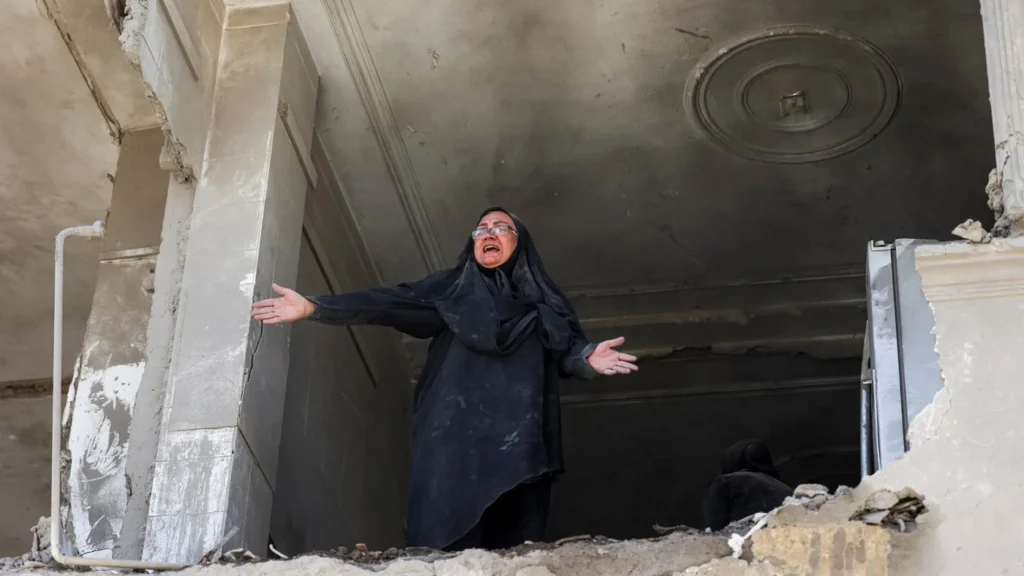
Here is one of the hidden faces of the economic crisis:

(¶C/¶t) + (¶C/¶S)rS + (1/2)(¶2C/¶S2)q2S2 = rC

The famous Black-Scholes equation to find the “correct price” for financial derivatives. Based on partial derivatives over time, this is classical calculus for continuous change; useful within a zone of stability, but not at the edge of that zone, the tipping points explored in René Thom’s catastrophe theory years earlier.

Black-Scholes is intellectually like calculating increasing speed of an accelerating car heading for a wall or an abyss. But, with warnings, no 1997 “Nobel Prize in Economics” (actually a Swedish State Bank’s prize honoring Alfred Nobel)? And one year later their company “Long Term Capital Management” had lost $100 billion and collapsed. The trade in derivatives is now at $1 quadrillion a year (15 zeros), ten times the industrial economy of the whole 20th century. Many got rich, but the system collapsed. Maybe prison would have been more adequate for intellectual sloppiness?

That equation is a part of the closed paradigm of economism. Does it offer a solution, not only for banks and bankers, but for the bottom 99.9%? The 0.1%/99.9% income ratio USA 2007 was 140; an unbelievable inequality, both cause and effect of the crisis.

They look at Germany’s decreasing unit labor cost 2005-2011 and high employment.[i] With top rate quality export products, and a single Euro currency their Eurozone trade surplus grew from 64 to Euro 140 billion in 2002-2009. They financed the trade deficit of Greece-Italy-Portugal-Spain-Ireland (GIPSI) with credits from German banks, at the end of 2009, with Euro 522 billion. However, they do not invest in GIPSI, but offer higher interest credit to pay back the credits, thereby putting the GIPSIs in debt bondage.[ii]

A very dangerous policy, close to a tipping edge, endangering not only the Euro but also the European Union as a peace project. A policy of debt forgiveness, buying out legitimate net creditors, letting other banks collapse, would be better than a debt bondage feeding nazism memories with hatred, like in Greece.

Terrorism next? We need good debt maps to design intelligent forgiveness policies for households, municipalities, countries, regions. The way out of a complex man-made catastrophe is not to punish the victims.

But we also need political action unlikely to come from the Berlin-Frankfurt-Brussels triangle. The strong formula would be GIPSIs unite; you have only your German banks to lose. They could jointly negotiate much better terms, compare successful policies, increase trade with each other, and lift themselves out of bondage. But, the illegitimate, perhaps illegal, Goldman-Sachs have former employees as prime ministers in Greece and Italy, economy minister in Spain and head of the ECB-European Central Bank. That spells finance, not real economy.

Inside victim countries periphery-periphery cooperation could alleviate much suffering from basic needs deficits. Class warfare from above displaced the economic shocks down to the vulnerable: the women, the older, the younger, the excluded, depriving them of money for food-clothes-housing-health-education. But the old lady in poor health with little money may offer housing for the younger at good health, against cleaning, helping, company. Money may not change hands: service for service, hours for hours, togetherness.

A farmer produces food; student farm hands could bring them closer to culture. Neighboring farms could have sales points directly from producers to consumers. At a world level four lane highways through Africa could make Latin America, Africa and Asia revive, and expand, the 500-1500 AD globalized real economy trade. GIPSI countries might link to South-South-South through North Africa.

Periphery-periphery cooperation is the best remedy against hierarchy and exploitation, not legislation when State politicians have been bought by Capital. The other approach is to lift the bottom up. In the giant Chinese 1991-2004 lifting of 400 million, the local community was the unit of development. The five-pronged approach – the public, private, civil society, technical sectors and a coordinator – gave micro credit to small companies dedicated to produce necessities, food-clothes-housing-polyclinics-schools, at low cost and price, employing the most needy.

When their needs were met, they sold to others at low prices, paid back the credit, and entered the economy with some cash in the pockets. Capi-communism, the latter for needs, the former for wants and markets. But the extreme West, the USA, might not bridge this gap mentally.

Some of the finance economy should be criminalized such as those who give credit far beyond their capital and those who contract loans far beyond their earning capacity. Failing that, the worst finance economy dealers should be boycotted.

The trend towards globalization should be away from Western neo-liberalism to more rational and human Buddhist, Islamic, Japanese and Chinese models. And global economies should be balanced with more local economies.

But the whole focus of economics should be changed, from the economism growth of market economy to meeting basic needs. From GNP-Gross National Product to the UNDP-United Nations Development Program HDI-Human Development Index, focusing on how many and who suffer basic needs deficits.

The Czech economist Tomás Sedlácek[iii] concludes from the years after communism that egoism is not the alternative; some state regulation is indispensable. There will be more approaches and alternatives as more economists leave the sinking ship of neo-liberal economism.[iv]

And hopefully not the likely and available use of war as the stimulus to get a stagnant inflation-deflation economy running again.

NOTES

[i]. Floyd Norris, IHT 17-02-2012.

[ii]. Rune Skarstein, the leading Norwegian economist specialist on the crisis, Klassekampen, 16 March 2011.

[iii]. Der Spiegel, 12/2012.

[iv]. And from non-economists. Thus, Galtung’s book, Peace Economics: From a Killing to a Living Economy, will be published by TRANSCEND University Press summer 2012.

Related Posts

Jan Oberg TFF director October 13, 2026 According to Alfred Nobel’s will, the Nobel Peace Prize shall be awarded: ”to the person who has done the most or best to advance fellowship among nations, the abolition or reduction of standing armies, and the establishment and promotion of peace congresses.” Further down, he also expresses how the prize for the “champions of peace” shall be decided: “that for champions of peace by a committee of five persons to be selected by the Norwegian Storting. Alfred Nobel’s will is remarkably short and clear. But few seem to have read it. Nobel did not say that the committee itself should consist of members of parliament. He entrusted the Storting with appointing five persons. In principle, it could have selected diplomats, mediators, peace researchers, conflict-resolution specialists, or other individuals with recognised expertise in matters of peace from around the world. Instead, the Storting gradually...
Small and different + among the 10% most active + 9,000 texts + 150 Associates + 60 000 a day — and a stubborn belief that peace is smarter and must be secured by peaceful means. In 2026, the Transnational Foundation for Peace and Future Research (TFF) turns 40. On Monday, October 5, 2026, a new TFF homepage will go live — a new gateway to more than 9,000 articles, analyses, research papers and other contributions produced over four decades of independent peace research. But this is not simply a new website. For four decades, TFF has worked from a simple conviction: peace is smarter than militarism and can be brought about by peaceful means. This is not merely an aspiration. It is the principle expressed in the UN Charter and the Gandhian tradition that has guided our work from the beginning. TFF is a research-based, independent and people-financed foundation....
It’s a matter of principles, courage, vision and pulling together – while the militarist world is falling apart… Peter Langille October 3, 2026 “Here, then, is the problem which we present to you, stark and dreadful and inescapable: Shall we put an end to the human race; or shall mankind renounce war?”The Bertrand Russell—Albert Einstein Manifesto, July 9, 1955 ⁕ The forecast for what’s ahead is worrisome. The sharp rise in armed conflicts over the past three years is adding to what was already the highest level in over seventy years. Genocides, which should be prevented are supported. A shared climate emergency that jeopardises survival is ignored. Diverse polls now suggest that people are war-weary, worried and interested in a more effective United Nations. And, there are viable policy options for a more secure world! Yet governments are doubling-down, betting on more war and investing heavily. If current trends persist,...

Recent Articles

Photo above: Carl Fredrik Reuterswärd’s Non-Violence outside UN Headquarters in New York. Kirill Levin, CC BY-NC-SA 2. Jan Oberg November 3, 2026 I am happy to be published in Horizons which is produced by the Center for International Relations and Sustainable Development, CIRSD, in Belgrade. My contribution brings out a radical re-thinking of what concepts such as defence, security, deterrence – and peace – may mean if we want to create a more peaceful world. It also summarises a few things I have been working with the last few decades. Please read it here Og her er den på dansk, takket være Johnny Baltzersens lynhurtige oversættelse
UNITE-tillid, DREAM-velstand og andre konstruktive komponenter Normally we publish articles in English here. But this is a translation of a very important TFF document that should reach as many as possible in Denmark since this country’s government has been one of the most hardline in Europe and, up till now at least, has refused to use diplomacy and, instead, spent tremendous sums on arming Ukraine with the express goal of defeating Russia. Thus this – unique – article is in Danish. Vi er Johnny Baltzersen og hans Fælles Sikkerhed – Fælles Fremtid på Substack overmåde taknemmelige for at have oversat og publiceret TFF’s 2025-portfølje for fredsidéer med henblik på Ukraines fremtid. Vi håber den nu kan nå mange flere danskere – som også vil sprede den og skabe debat – nu den danske regerings og folketingspartiernes politik på dette område siden 2022 står nu – forudsigeligt – ved vejs ende....
Jan Oberg TFF director October 28, 2026 Exactly one month has now passed since I published my criticism of the introduction to the special issue on Johan Galtung published by the Journal of Global Security Studies, JoGSS, and of Tor Egil Førland’s chapter about Galtung which serves as a preview to his forthcoming biography of Galtung to be published by PRIO. See the original on The Transnational here and the same article on TFF Substack with many general and critical comments and, in particular, the people who decided to withdraw from the biography project in protest. The special issue itself was extraordinary. It was devoted to the intellectual legacy of one of the founders of peace research and contained a number of strong assessments of his personality, scholarship, intellectual trajectory, and public role. Such assessments are, of course, entirely legitimate. No scholar is beyond criticism, and neither was Johan Galtung....

TFF on Substack

Discover and subscribe to more peace materials on TFF Substack

Most Popular

Photo above: Carl Fredrik Reuterswärd’s Non-Violence outside UN Headquarters in New York. Kirill Levin, CC BY-NC-SA 2. Jan Oberg November 3, 2026 I am happy to be published in Horizons which is produced by the Center for International Relations and Sustainable Development, CIRSD, in Belgrade. My contribution brings out a radical re-thinking of what concepts such as defence, security, deterrence – and peace – may mean if we want to create a more peaceful world. It also summarises a few things I have been working with the last few decades. Please read it here Og her er den på dansk, takket være Johnny Baltzersens lynhurtige oversættelse
UNITE-tillid, DREAM-velstand og andre konstruktive komponenter Normally we publish articles in English here. But this is a translation of a very important TFF document that should reach as many as possible in Denmark since this country’s government has been one of the most hardline in Europe and, up till now at least, has refused to use diplomacy and, instead, spent tremendous sums on arming Ukraine with the express goal of defeating Russia. Thus this – unique – article is in Danish. Vi er Johnny Baltzersen og hans Fælles Sikkerhed – Fælles Fremtid på Substack overmåde taknemmelige for at have oversat og publiceret TFF’s 2025-portfølje for fredsidéer med henblik på Ukraines fremtid. Vi håber den nu kan nå mange flere danskere – som også vil sprede den og skabe debat – nu den danske regerings og folketingspartiernes politik på dette område siden 2022 står nu – forudsigeligt – ved vejs ende....
Jan Oberg TFF director October 28, 2026 Exactly one month has now passed since I published my criticism of the introduction to the special issue on Johan Galtung published by the Journal of Global Security Studies, JoGSS, and of Tor Egil Førland’s chapter about Galtung which serves as a preview to his forthcoming biography of Galtung to be published by PRIO. See the original on The Transnational here and the same article on TFF Substack with many general and critical comments and, in particular, the people who decided to withdraw from the biography project in protest. The special issue itself was extraordinary. It was devoted to the intellectual legacy of one of the founders of peace research and contained a number of strong assessments of his personality, scholarship, intellectual trajectory, and public role. Such assessments are, of course, entirely legitimate. No scholar is beyond criticism, and neither was Johan Galtung....
Read More
knotted gun
Photo above: Carl Fredrik Reuterswärd’s Non-Violence outside UN Headquarters in New York. Kirill Levin, CC BY-NC-SA 2. Jan Oberg November 3, 2026 I am happy to be published in Horizons which is produced by the Center for International Relations and Sustainable Development, CIRSD, in Belgrade. My contribution brings out a radical re-thinking of what concepts such as defence, security, deterrence – and peace – may mean if we want to create a more peaceful world. It also summarises a few things I have been working with the last few decades. Please read it here Og her er den på dansk, takket være Johnny Baltzersens lynhurtige oversættelse
TFFPortfolioVign
UNITE-tillid, DREAM-velstand og andre konstruktive komponenter Normally we publish articles in English here. But this is a translation of a very important TFF document that should reach as many as possible in Denmark since this country’s government has been one of the most hardline in Europe and, up till now at least, has refused to use diplomacy and, instead, spent tremendous sums on arming Ukraine with the express goal of defeating Russia. Thus this – unique – article is in Danish. Vi er Johnny Baltzersen og hans Fælles Sikkerhed – Fælles Fremtid på Substack overmåde taknemmelige for at have oversat og publiceret TFF’s 2025-portfølje for fredsidéer med henblik på Ukraines fremtid. Vi håber den nu kan nå mange flere danskere – som også vil sprede den og skabe debat – nu den danske regerings og folketingspartiernes politik på dette område siden 2022 står nu – forudsigeligt – ved vejs ende....
JoGSS-Silent
Jan Oberg TFF director October 28, 2026 Exactly one month has now passed since I published my criticism of the introduction to the special issue on Johan Galtung published by the Journal of Global Security Studies, JoGSS, and of Tor Egil Førland’s chapter about Galtung which serves as a preview to his forthcoming biography of Galtung to be published by PRIO. See the original on The Transnational here and the same article on TFF Substack with many general and critical comments and, in particular, the people who decided to withdraw from the biography project in protest. The special issue itself was extraordinary. It was devoted to the intellectual legacy of one of the founders of peace research and contained a number of strong assessments of his personality, scholarship, intellectual trajectory, and public role. Such assessments are, of course, entirely legitimate. No scholar is beyond criticism, and neither was Johan Galtung....
Screenshot 2026-10-26 115647
An aspect of Iran’s culture and civilisation you’ve probably never heard about. Don’t be surprised if the US and Israel also try to bomb them. Jan ObergTFF director October 26, 2026 Today – under the “USraeli” threat of new “annihilating” bombings – opens the 7th International Conference on Peace and Conflict Resolution at Tehran’s University. As far as I can tell, this is the only permanent, advanced peace research institution in West Asia/the Middle East. Perhaps more countries in that region could be inspired? I mean, how many military “security” institutes and military academies do they have? Many peace research institutes and university departments have been established since the 1950s in the West. They are now all under attack; some have closed down, some have gone mainstream, yet others kept the name but do nothing to research peace and disseminate results or advice; instead, they cooperate with militarism’s platforms such...
Screenshot 2026-10-15 141837
Let’s discuss using AI to create peace – in contrast to boring geopolitics devoid of creative healing and visions. Jan Oberg TFF director October 15, 2026 I asked VEED to create a short video exemplifying how peace is preferable to war, then chose the lady as a template. Simple as that. In less than a minute, it produced this video, which any peace-loving person would appreciate. The only problem is that human intelligence (HI), at least the one that exists among Western decision-makers, isn’t half as moral or smart as AI. I have used AI to dialogue about peace and peace plans, creative conflict resolution and visions of a better future for humankind. It so happens that I am having more stimulating, intelligent, creative and moral discussions with AI than I could possibly have with any EU or NATO leader today. Yes, AI has very problematic and dangerous aspects; used...
girl-5894831_1280
Below are TFF-related media mentions, comments, videos and social media posts published elsewhere but not on this homepage. We happen to catch and list only a fraction. Regarding video comments and debates, we recommend that you go to the TFF Video Channel on Substack where many of them are reproduced. Jan Oberg is a contributor to China Daily – 52 million daily clicks – and Global Times, CGTN and CCTV (the national television), China Investment, Xinhua News Agency and several others. Articles and videos on these media very often multiply into countless Chinese (and Western media) that re-post them from these main media. Thanks to The China Academy, his analyses, interviews and comments are frequently posted on YouTube channels such as Thinkers Forum and Wave Media. These videos are often re-posted on Bilibili (China’s YouTube), the China Content Center on TikTok, and on the Chinese edition of TikTok, Douyin.com. This means reaching hundreds of millions of viewers worldwide over a year. While there are too many to catch on all these...




