
Don’t be fooled: Others Could Have More Interest in Sending Drones to the Nordic Countries than Russia

Drones over Nordic airports. No damage. No trace. No answers. Most assume Russia—but what if that’s not so? Why is there so much we are not told?

This article explores the strategic ambiguity behind recent drone incursions and asks: Who else might benefit from sending drones into NATO airspace?

From Ukraine’s surprising drone supremacy to Russia’s possible signalling, the silence itself may be the loudest message.

These are the kinds of questions decent, intelligent investigative journalists and commentators could easily research. Why don’t they?

Jan Oberg

September 29, 2025

Did you, dear reader, know or think of this? That the most powerful weapon in today’s conflicts might be the one that leaves no trace – and no answers. Just enough fear to justify the next move?

Recently, drones have repeatedly appeared over Nordic airports and near some military facilities. They cause no damage – for which reason the designation “hybrid attack” is misleading but serves a purpose. These drones appear out of nowhere, leave no trace, and disappear. They seem not even to be photographed, pushed away or shot at. Yet airports shut down, headlines flare, and defence budgets will likely increase further – as will hatred against those pesky Russians whose evil they unfortunately can not show us any evidence of.

No one claims responsibility. No drones are intercepted. No origin is confirmed. This isn’t a technical failure. It’s a tactic. A pattern of engineered ambiguity, where the absence of attribution becomes the trigger for escalation.

We’ve seen this logic before. The Nord Stream pipeline was sabotaged. Russia was blamed. But no hard evidence ever appeared. Still, the consequences were immediate: energy decoupling, deepened economic crisis, NATO buildup, and hardened public opinion.

Now, drones seem to do something similar. They don’t attack. They just appear. And disappear. And leave behind fear – as well as speculation, and a growing appetite for military readiness. But let’s try an interest analysis which nobody does for reasons you can imagine.

Who might be behind it – and why?

Russia?

Can’t be excluded, of course. It could be testing NATO’s airspace defences, sowing confusion, or signalling reach. But it’s risky. If proven, it could justify NATO retaliation or deeper involvement in Ukraine. So far, Russia denies everything – and no country has presented hard proof.

And What If It Is Russia?

Suppose the drones are Russian. What then?

It could be a signal, a quiet warning. A way of saying: This is just a taste of what you’ll get if you keep building US bases, funding Ukrainian weapons factories, and buy new weapons that you know very well that we see as a direct threat -as you would if you were us.

Denmark, for example, has just announced it will acquire long-range strike weapons for the first time, perhaps including systems like the Tomahawk cruise missile and JASSM-ER for its F-35s. This marks a major shift: from defence to offensive deterrence, from shielding cities to striking deep into enemy territory.

From Russia’s perspective, this isn’t just military modernisation – it’s provocation and encirclement. And drone incursions, if they are Russian, could be a way to test airspace, disrupt readiness, and remind NATO that escalation cuts both ways.

But again – no one claims responsibility. No one confirms origin. And that silence is the loudest part of the message.

Ukraine?

Surprisingly, yes—Ukraine now has the technical ability to carry out such missions. You are not told that its drone industry has grown at an astonishing speed and out-competes that of Russia:

– Over 500 manufacturers.

– Monthly output of 200,000 FPV drones.

– Long-range systems reaching up to 750–800 km.

– AI-assisted swarms trained on thousands of combat missions.

Ukraine’s drones have already struck targets deep inside Russia. Reaching Nordic airspace is well within their range. If launched from a NATO country – say, Poland or a Baltic republic – they could be untraceable. And if they don’t cause damage, they leave only questions.

Would NATO ever tell you if Ukraine were behind such incursions? Certainly not – NATO would have endorsed it and even participated in this false flag operation. It would fracture alliances, expose covert coordination, and undermine the West’s narrative. Silence is safer.

Britain?

It’s possible. Britain has deep ties to Ukraine’s drone programs and a long history of covert operations. It could provide logistics, tech, or strategic framing – especially if the goal is to provoke Russia without direct confrontation.

Why airports?

Because they’re symbolic. Civilian infrastructure. Dual-use hubs. Shutting down an airport causes panic, grabs headlines, annoys travelling citizens and sends a message: “You’re vulnerable.” And in radar-heavy zones, drones are harder to track – perfect for plausible deniability.

What’s the Bigger Picture?

This isn’t just about drones. It’s about shaping public perception. Creating fear and justifying even higher defence spending. And preparing the ground for NATO’s deeper involvement in Ukraine – possibly under the label of “peacekeeping,” even though Russia would never accept NATO troops on Ukrainian soil, and NATO has no experience or capabilities in the field of peace-keeping.

The drones don’t need to explode. They just need to appear and vanish to make their masters’ point. And leave behind the – nasty – story used e.g. by the Danish PM about “we do not have the evidence that it is Russia, but we know Russia is the largest threat to Europe.”

But don’t be fooled. Someone knows exactly who staged this drone spectacle. The Nordic leaders know it too—and they know precisely what they want you to think and not to think.

And if they genuinely don’t know, then their military and civilian “intelligence” services are incompetent. To put it mildly.

Why this could be a false flag

I’ve got a nasty mind—and a few decades in the trenches of so-called security politics.

Here’s my hypothesis: When Zelensky met Trump at the UN, The Independent reports he got the green light to strike deep into Russia. Special Envoy Keith Kellogg confirmed the White House “does not object.” NATO’s Matt Whitaker echoed it: deeper strike capabilities to pressure Russia into negotiations. This marks a radical shift—a reckless escalation masquerading as strategy. And it’s madness – a madness that has to be justified.

In that light, the drone “attacks” look suspiciously like a false flag – designed to justify the next step up the escalation ladder. Media people and politically correct commentators focus on the here-and-now event, not on complexity and how events relate to each other.

The elites of MIMAC – the Military-Industrial-Media-Academic Complex – know nothing but military moves. They abandoned diplomacy, conflict resolution, and confidence-building – not to mention peace – long ago.

They operate in an echo chamber so thick with self-righteous groupthink that they can’t imagine that they could be wrong.

But they could well be. Fatally wrong – because they are more loyal to other elites than their own citizens and largely ignorant about the consequences of their deeds: After all they think it is about “us” winning and “them” losing. Because they do not have the intellectual capacity to solve problems, only to use hammers where none are needed.

In summary, watch events over the next 1–3 weeks. Then you’ll see what the drone “attacks” were really about.
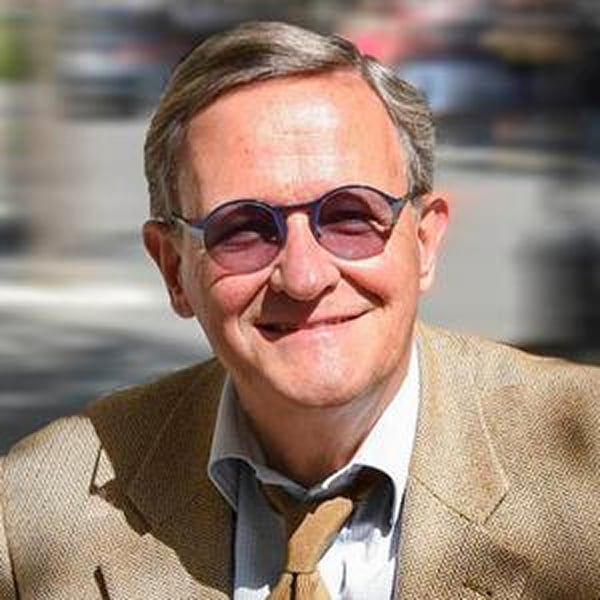

Peace & future researcher + ‌Art Photographer

Related Posts

Advocates of nuclear disarmament are regularly dismissed by the champions of nuclear deterrence as naïve and unrealistic, utopian or even irresponsible. Yet this ‘doctrine’ of deterrence, regarded by France as the ‘cornerstone’ of its national security, is based on quasi-religious beliefs, a theory that cannot be proven, risky gambles and fragile assumptions. So much so that one might legitimately ask which side the ‘Care Bears’ are on. Marc FinaudVice-President of Initiatives for Nuclear Disarmament (IDN) October 9, 2026 This article was originally published on Pressenza When it comes to these things being treated as religious concepts, look here. Idealists and realists It was Hubert Védrine, François Mitterrand’s former Foreign Minister, who repeatedly coined the phrase: ‘Europeans are a sort of Care Bears who don’t realise they’re living in Jurassic Park’. He applies this reference to the cartoon for well-behaved children not only to what he regards as weakness or idealism...
Small and different + among the 10% most active + 9,000 texts + 150 Associates + 60 000 a day — and a stubborn belief that peace is smarter and must be secured by peaceful means. In 2026, the Transnational Foundation for Peace and Future Research (TFF) turns 40. On Monday, October 5, 2026, a new TFF homepage will go live — a new gateway to more than 9,000 articles, analyses, research papers and other contributions produced over four decades of independent peace research. But this is not simply a new website. For four decades, TFF has worked from a simple conviction: peace is smarter than militarism and can be brought about by peaceful means. This is not merely an aspiration. It is the principle expressed in the UN Charter and the Gandhian tradition that has guided our work from the beginning. TFF is a research-based, independent and people-financed foundation....
Tony Robinson October 4, 2026 Violence is easy to recognise when someone is being beaten, shot or killed. It becomes more difficult when nobody is holding a weapon. Poverty, discrimination, exploitation and repression can restrict a human life just as effectively, although they do so in very different ways and with very different consequences. Simply adding more categories to an ever-growing list of forms of violence does not really solve the problem. The more interesting question is what all these different situations have in common and why it makes sense to describe them using the same word. Human beings do not simply react to what happens around them. They remember the past, imagine things that do not yet exist, make plans and undertake projects. Workers organise because they imagine different working conditions; people migrate because they imagine another life somewhere else; social movements emerge because people refuse to accept the...

Recent Articles

Advocates of nuclear disarmament are regularly dismissed by the champions of nuclear deterrence as naïve and unrealistic, utopian or even irresponsible. Yet this ‘doctrine’ of deterrence, regarded by France as the ‘cornerstone’ of its national security, is based on quasi-religious beliefs, a theory that cannot be proven, risky gambles and fragile assumptions. So much so that one might legitimately ask which side the ‘Care Bears’ are on. Marc FinaudVice-President of Initiatives for Nuclear Disarmament (IDN) October 9, 2026 This article was originally published on Pressenza When it comes to these things being treated as religious concepts, look here. Idealists and realists It was Hubert Védrine, François Mitterrand’s former Foreign Minister, who repeatedly coined the phrase: ‘Europeans are a sort of Care Bears who don’t realise they’re living in Jurassic Park’. He applies this reference to the cartoon for well-behaved children not only to what he regards as weakness or idealism...
What the West Borrowed from Asia and What It Left Behind Jan Krikke October 8, 2026 The article was originally published here In the late 1960s, the musical Hair announced that the Age of Aquarius was dawning. Its opening anthem promised a transformation of human consciousness: an era of peace, harmony and understanding. Half a century later, a familiar echo of that promise is a meditation app offered by your employer. You can find it in the same list of benefits as the pension plan and the gym discount. How did a spiritual revolution become an employee benefit? The answer lies in the history of the movement known as New Age: where it came from, what it borrowed from Asia, and why the meaning of what it borrowed changed in the process. Two definitions will help. New Age is a loose label for a wide range of spiritual practices and...
Small and different + among the 10% most active + 9,000 texts + 150 Associates + 60 000 a day — and a stubborn belief that peace is smarter and must be secured by peaceful means. In 2026, the Transnational Foundation for Peace and Future Research (TFF) turns 40. On Monday, October 5, 2026, a new TFF homepage will go live — a new gateway to more than 9,000 articles, analyses, research papers and other contributions produced over four decades of independent peace research. But this is not simply a new website. For four decades, TFF has worked from a simple conviction: peace is smarter than militarism and can be brought about by peaceful means. This is not merely an aspiration. It is the principle expressed in the UN Charter and the Gandhian tradition that has guided our work from the beginning. TFF is a research-based, independent and people-financed foundation....

TFF on Substack

Discover and subscribe to more peace materials on TFF Substack

Most Popular

Advocates of nuclear disarmament are regularly dismissed by the champions of nuclear deterrence as naïve and unrealistic, utopian or even irresponsible. Yet this ‘doctrine’ of deterrence, regarded by France as the ‘cornerstone’ of its national security, is based on quasi-religious beliefs, a theory that cannot be proven, risky gambles and fragile assumptions. So much so that one might legitimately ask which side the ‘Care Bears’ are on. Marc FinaudVice-President of Initiatives for Nuclear Disarmament (IDN) October 9, 2026 This article was originally published on Pressenza When it comes to these things being treated as religious concepts, look here. Idealists and realists It was Hubert Védrine, François Mitterrand’s former Foreign Minister, who repeatedly coined the phrase: ‘Europeans are a sort of Care Bears who don’t realise they’re living in Jurassic Park’. He applies this reference to the cartoon for well-behaved children not only to what he regards as weakness or idealism...
What the West Borrowed from Asia and What It Left Behind Jan Krikke October 8, 2026 The article was originally published here In the late 1960s, the musical Hair announced that the Age of Aquarius was dawning. Its opening anthem promised a transformation of human consciousness: an era of peace, harmony and understanding. Half a century later, a familiar echo of that promise is a meditation app offered by your employer. You can find it in the same list of benefits as the pension plan and the gym discount. How did a spiritual revolution become an employee benefit? The answer lies in the history of the movement known as New Age: where it came from, what it borrowed from Asia, and why the meaning of what it borrowed changed in the process. Two definitions will help. New Age is a loose label for a wide range of spiritual practices and...
Small and different + among the 10% most active + 9,000 texts + 150 Associates + 60 000 a day — and a stubborn belief that peace is smarter and must be secured by peaceful means. In 2026, the Transnational Foundation for Peace and Future Research (TFF) turns 40. On Monday, October 5, 2026, a new TFF homepage will go live — a new gateway to more than 9,000 articles, analyses, research papers and other contributions produced over four decades of independent peace research. But this is not simply a new website. For four decades, TFF has worked from a simple conviction: peace is smarter than militarism and can be brought about by peaceful means. This is not merely an aspiration. It is the principle expressed in the UN Charter and the Gandhian tradition that has guided our work from the beginning. TFF is a research-based, independent and people-financed foundation....
Read More
images-2
Advocates of nuclear disarmament are regularly dismissed by the champions of nuclear deterrence as naïve and unrealistic, utopian or even irresponsible. Yet this ‘doctrine’ of deterrence, regarded by France as the ‘cornerstone’ of its national security, is based on quasi-religious beliefs, a theory that cannot be proven, risky gambles and fragile assumptions. So much so that one might legitimately ask which side the ‘Care Bears’ are on. Marc FinaudVice-President of Initiatives for Nuclear Disarmament (IDN) October 9, 2026 This article was originally published on Pressenza When it comes to these things being treated as religious concepts, look here. Idealists and realists It was Hubert Védrine, François Mitterrand’s former Foreign Minister, who repeatedly coined the phrase: ‘Europeans are a sort of Care Bears who don’t realise they’re living in Jurassic Park’. He applies this reference to the cartoon for well-behaved children not only to what he regards as weakness or idealism...
8824b09f-33a5-43f9-9fd0-550f28cda24d_1536x1024
What the West Borrowed from Asia and What It Left Behind Jan Krikke October 8, 2026 The article was originally published here In the late 1960s, the musical Hair announced that the Age of Aquarius was dawning. Its opening anthem promised a transformation of human consciousness: an era of peace, harmony and understanding. Half a century later, a familiar echo of that promise is a meditation app offered by your employer. You can find it in the same list of benefits as the pension plan and the gym discount. How did a spiritual revolution become an employee benefit? The answer lies in the history of the movement known as New Age: where it came from, what it borrowed from Asia, and why the meaning of what it borrowed changed in the process. Two definitions will help. New Age is a loose label for a wide range of spiritual practices and...
Screenshot 2026-10-04 210142
Small and different + among the 10% most active + 9,000 texts + 150 Associates + 60 000 a day — and a stubborn belief that peace is smarter and must be secured by peaceful means. In 2026, the Transnational Foundation for Peace and Future Research (TFF) turns 40. On Monday, October 5, 2026, a new TFF homepage will go live — a new gateway to more than 9,000 articles, analyses, research papers and other contributions produced over four decades of independent peace research. But this is not simply a new website. For four decades, TFF has worked from a simple conviction: peace is smarter than militarism and can be brought about by peaceful means. This is not merely an aspiration. It is the principle expressed in the UN Charter and the Gandhian tradition that has guided our work from the beginning. TFF is a research-based, independent and people-financed foundation....
Living-Peace-Sign-Budapest-copy
Tony Robinson October 4, 2026 Violence is easy to recognise when someone is being beaten, shot or killed. It becomes more difficult when nobody is holding a weapon. Poverty, discrimination, exploitation and repression can restrict a human life just as effectively, although they do so in very different ways and with very different consequences. Simply adding more categories to an ever-growing list of forms of violence does not really solve the problem. The more interesting question is what all these different situations have in common and why it makes sense to describe them using the same word. Human beings do not simply react to what happens around them. They remember the past, imagine things that do not yet exist, make plans and undertake projects. Workers organise because they imagine different working conditions; people migrate because they imagine another life somewhere else; social movements emerge because people refuse to accept the...
b54a1f10-8c65-4f0b-9dd5-4abc0a7d04cc_2659x2659
It’s a matter of principles, courage, vision and pulling together – while the militarist world is falling apart… Peter Langille October 3, 2026 “Here, then, is the problem which we present to you, stark and dreadful and inescapable: Shall we put an end to the human race; or shall mankind renounce war?”The Bertrand Russell—Albert Einstein Manifesto, July 9, 1955 ⁕ The forecast for what’s ahead is worrisome. The sharp rise in armed conflicts over the past three years is adding to what was already the highest level in over seventy years. Genocides, which should be prevented are supported. A shared climate emergency that jeopardises survival is ignored. Diverse polls now suggest that people are war-weary, worried and interested in a more effective United Nations. And, there are viable policy options for a more secure world! Yet governments are doubling-down, betting on more war and investing heavily. If current trends persist,...
010
Johan Galtung 1930-2024October 2015 Published here on October 3, 2026 Let us focus on Civilization for conflict analysis and remedies. Major forms of disorder use violence; war is state organized violence. The most belligerent states are the United States of America and Israel, both with civilization roots. National Evangelism, the US Protestant Christian civilization– more national than evangelical–justifies US warfare as exceptionalism of a people chosen by God, with a manifest destiny to run the world. Orthodox Judaism justifies Israeli warfare to conquer and expand from Nile to Euphrates as a religious right and duty to the Eternal One. The third most belligerent country, the UK, no longer believes it is God-chosen but chosen by the USA; not quite the same but something. But the root cause of global disorder lies in the Occident–with Islam–seeing itself as the single, universal civilization valid for all at all times, all others being...