
TFF PressInfo 280: Danish F16s to fight ISIS: Danish government more loyal with the U.S. than with its own citizens

What’s your image of Denmark? Apart from the Little Mermaid, Carlsberg beer and H.C. Andersen perhaps something with decency, welfare, development aid, equality and peace?

Unfortunately, that image is outdated. During the last good 15 years Denmark has participated in wars on/in Yugoslavia and Afghanistan, it was an occupying country in Iraq for four years and a main bomber nation of Libya.

The government’s decision earlier today to send 7 F16s to fight with the U.S. increases the risk of terror actions against Denmark.

It must have been known for quite some time since, about a month ago, the Danish government decided to send a Hercules transport plane with humanitarian aid to Iraq. Most likely, it was a set-up because it was immediately changed into a Hercules transport plane + 55 soldiers to assist the U.S. and the Kurds.

Today’s decision is a violation of the UN Charter – the spirit of the Preamble as well as Article 1 which states that peace shall be established by peaceful means – and, later, only when everything has been tried and found in vain can a military action be decided.

Denmark must now calculate with Danish casualties and, even more worse, with taking responsibility for scores of innocent civilians’ death – something that can’t be avoided when targeting individuals from the air.

The decision documents that Denmark has learnt nothing from the earlier – failed – wars and that it does not have alternative expertise.

The common sense, solidarity and humanity that characterised Denmark, at least to some extent, about 20 years ago is now eradicated and replaced by thoughtless militarism; its only guideline has been and is: Accept willingly and unconditionally what the US does and follow it when it calls upon you to do its dirty job – His Master’s Voice.

If you think I exaggerate: There is not one major policy or decision the last 30-40 years where Denmark has shown the courage to stand up against Washington.

Millions of dollars are allocated to state-financed research institutes, military analysis centres and mainstream thinking that “explains” and legitimizes the policies. (The only peace research institute, COPRI, which was very well evaluated by international scholars was destroyed by the government of Anders Fogh Rasmussen who also made Denmark an occupying power – only to be rewarded with the position of NATO Secretary-General).

It is my judgement that the decision to participate in the war on Iraq was the largest foreign policy blunder in Denmark since 1945.

I wrote ”Predictable Fiasco” in which the present situation in Iraq was predicted fairly precisely and I presented a 20-point plan on what to do instead of war.

Thus I don’t know how to characterise a decision by a Social Democratic-led government to go to war in Iraq for a second time!

PM Helle Thorning Schmidt presented the decision around lunch time today Friday September 26. Each of her arguments and assumptions were dubious, anti-intellectual and constructed to suit the event

1) She said that this was not a war because ISIS is not a state (!!) – now you know the level of what followed.

But this is war no matter what her spin doctors may have invented. Those who in the thousands will be killed – ISIS people as well as civilians – can’t see it as anything but war. And nothing but military equipment is being used.

2) As mentioned above, the decision violates the UN Charter.

3) Mission creep is already a fact. First, Denmark should send only humanitarian aid, then it changed to military aid and now 7 F16s – the next step is likely to be what is constantly denied and therefore rather safe to predict: Boots on the ground.

4) It will not be a short, limited affair – it could well last for years. ISIS may be relatively small in numbers but could grow fast – there is enough of hatred; it has a lot of funds from Western allies such as Saudi-Arabia, Qatar and Bahrein – who are playing a double game. And they have advanced weapons, a lot of it U.S.-produced, stolen from the Iraqis.

5) ISIS is the result of more than 100 years of Western arrogance in the region – wars, deceit, lies and agreements such as Sykes-Picot (1916) and Balfour – imposing of Western values, occupations (foremost Iraq), base-building, stealing of oil and coup d’etats. The list is long!

Read the first of four articles here by TFF Associate Farhang Jahanpour at Oxford – one of the world’s leading scholars and commentators on the region as a whole.

6) This action as a whole will only have one result: More terrorists. The entire ‘War on Terror’ is wrongly conceived from October 7, 2001. We can’t rid the world of terrorism by killing terrorists and ignoring the underlying causes any more than we can combat criminality by killing criminals.

Eventually there will be a blowback, a boomerang effect.

7) The Danish government now gives ISIS and others a perfect reason for targeting Denmark. It puts the security of the Danish citizens at risk – something that must be seen in relation also to the Muhammad caricatures as well as Denmark’s participation in the wars in Afghanistan, Iraq and Libya.

While it is the first duty of a government to secure the lives and safety of its people, the Danish government does the opposite. To be loyal with Its Master’s Voice.

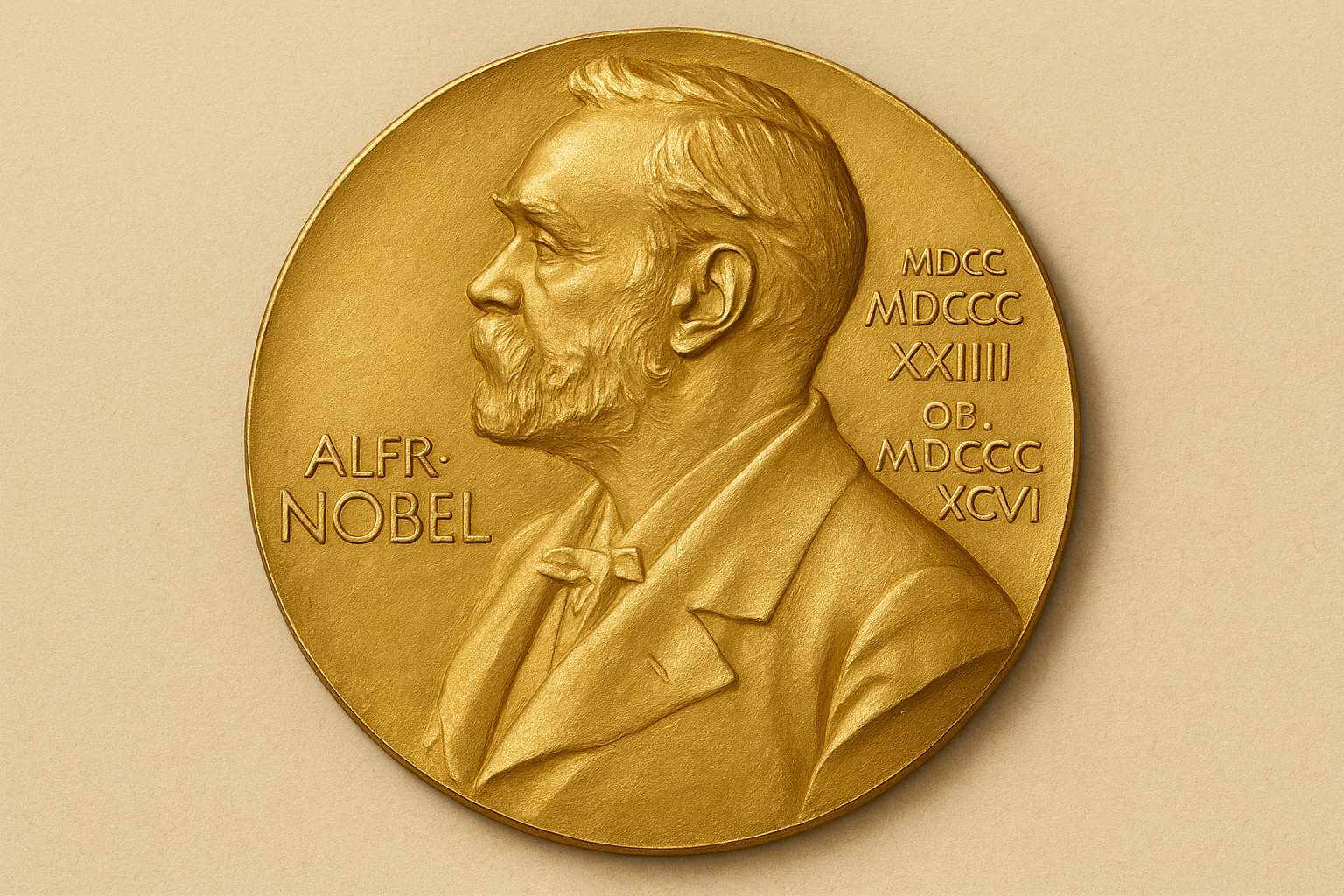
Add to this that Obama’s speech about how to combat ISIS was a manifest disappointment with neither strategy nor a vision for the future of the region. It boiled down to the bizarre: We kill people who kill people because it is wrong to kill people! (Deliver back that Nobel Peace prize medal, Mr. President!)

8 ) Finally, Denmark’s defence, security and foreign policy establishment increasingly looks like a one-party system with very little diversity.

All security research at its Institute for International Studies is financed by – you guessed it! – the Ministry of Defence. Not much research there on peace by peaceful means or alternative defence, peace-making, reconciliation, forgiveness etc.

Since 1975 when Denmark bought F16s a MIMAK has developed – a Military-Industrial-Media-Academic Complex with a degree of consent that is pathetic for a society that professes to be pluralist, democratic, humanist and open (-minded).

In particular, Denmark has been rewarded with lots of contracts for its booming military industry – and plans to waste at least US$ 5 billion on new fighter planes.

So, next week the Danish Parliament will – probably with one small left-wing party as dissenter – endorse that Denmark goes to war yet again, for a fifth time – only to cash in yet another fiasco (to be denied).

This only goes to show that democracy is fforced to give in to militarism – because there is a considerable opinion in Denmark that does not support this and also did not support the four preceding wars.

Like in Norway and Sweden (exception in the latter: the xenophobic Sweden Democrats) those of us believing in international law and who have the idea that peace is better than war have no party anymore that represents our views.

In summary, the Denmark and the Norden you may think you know is changing and we need a debate about this moral and intellectual defeat under MIMAK in our countries.

But certainly people in the rest of the world who used to look up to Scandinavia should know and tell us what they think.

Rogue states, big and small, is a problem to the whole world. And the sooner they change, the better for all.
Peace & future researcher + ‌Art Photographer

Related Posts

Advocates of nuclear disarmament are regularly dismissed by the champions of nuclear deterrence as naïve and unrealistic, utopian or even irresponsible. Yet this ‘doctrine’ of deterrence, regarded by France as the ‘cornerstone’ of its national security, is based on quasi-religious beliefs, a theory that cannot be proven, risky gambles and fragile assumptions. So much so that one might legitimately ask which side the ‘Care Bears’ are on. Marc FinaudVice-President of Initiatives for Nuclear Disarmament (IDN) October 9, 2026 This article was originally published on Pressenza When it comes to these things being treated as religious concepts, look here. Idealists and realists It was Hubert Védrine, François Mitterrand’s former Foreign Minister, who repeatedly coined the phrase: ‘Europeans are a sort of Care Bears who don’t realise they’re living in Jurassic Park’. He applies this reference to the cartoon for well-behaved children not only to what he regards as weakness or idealism...
What the West Borrowed from Asia and What It Left Behind Jan Krikke October 8, 2026 The article was originally published here In the late 1960s, the musical Hair announced that the Age of Aquarius was dawning. Its opening anthem promised a transformation of human consciousness: an era of peace, harmony and understanding. Half a century later, a familiar echo of that promise is a meditation app offered by your employer. You can find it in the same list of benefits as the pension plan and the gym discount. How did a spiritual revolution become an employee benefit? The answer lies in the history of the movement known as New Age: where it came from, what it borrowed from Asia, and why the meaning of what it borrowed changed in the process. Two definitions will help. New Age is a loose label for a wide range of spiritual practices and...
Small and different + among the 10% most active + 9,000 texts + 150 Associates + 60 000 a day — and a stubborn belief that peace is smarter and must be secured by peaceful means. In 2026, the Transnational Foundation for Peace and Future Research (TFF) turns 40. On Monday, October 5, 2026, a new TFF homepage will go live — a new gateway to more than 9,000 articles, analyses, research papers and other contributions produced over four decades of independent peace research. But this is not simply a new website. For four decades, TFF has worked from a simple conviction: peace is smarter than militarism and can be brought about by peaceful means. This is not merely an aspiration. It is the principle expressed in the UN Charter and the Gandhian tradition that has guided our work from the beginning. TFF is a research-based, independent and people-financed foundation....

Recent Articles

Jan Oberg TFF director October 13, 2026 According to Alfred Nobel’s will, the Nobel Peace Prize shall be awarded: ”to the person who has done the most or best to advance fellowship among nations, the abolition or reduction of standing armies, and the establishment and promotion of peace congresses.” Further down, he also expresses how the prize for the “champions of peace” shall be decided: “that for champions of peace by a committee of five persons to be selected by the Norwegian Storting. Alfred Nobel’s will is remarkably short and clear. But few seem to have read it. Nobel did not say that the committee itself should consist of members of parliament. He entrusted the Storting with appointing five persons. In principle, it could have selected diplomats, mediators, peace researchers, conflict-resolution specialists, or other individuals with recognised expertise in matters of peace from around the world. Instead, the Storting gradually...
The Quest for Humane Survival Richard Falk Professor emeritus, Princeton UniversityTFF Associate since 1986October 12, 2026 After decades of teaching and writing about international law in academic frameworks that were not institutionally situated within law school environments—at Princeton and the University of California, Santa Barbara—I found myself most receptive to the TWAIL outlook. It has been especially illuminating in clarifying the extent to which international law evolved as a dialogical critique of Europe’s efforts to legitimize its colonial undertakings. In particular, TWAIL has exposed how international law has functioned to legalize the subjugation of Third World peoples, securing conditions for exploitative investment and trade relations, the coercive enforcement of public debts, and an ideology of cultural superiority. TWAIL’s exposure of these economic legacies of colonialism has influenced my understanding of the history and development of international law, broadly conceived, as an ideological project of the Western sub-system of the world...
Advocates of nuclear disarmament are regularly dismissed by the champions of nuclear deterrence as naïve and unrealistic, utopian or even irresponsible. Yet this ‘doctrine’ of deterrence, regarded by France as the ‘cornerstone’ of its national security, is based on quasi-religious beliefs, a theory that cannot be proven, risky gambles and fragile assumptions. So much so that one might legitimately ask which side the ‘Care Bears’ are on. Marc FinaudVice-President of Initiatives for Nuclear Disarmament (IDN) October 9, 2026 This article was originally published on Pressenza When it comes to these things being treated as religious concepts, look here. Idealists and realists It was Hubert Védrine, François Mitterrand’s former Foreign Minister, who repeatedly coined the phrase: ‘Europeans are a sort of Care Bears who don’t realise they’re living in Jurassic Park’. He applies this reference to the cartoon for well-behaved children not only to what he regards as weakness or idealism...

TFF on Substack

Discover and subscribe to more peace materials on TFF Substack

Most Popular

Jan Oberg TFF director October 13, 2026 According to Alfred Nobel’s will, the Nobel Peace Prize shall be awarded: ”to the person who has done the most or best to advance fellowship among nations, the abolition or reduction of standing armies, and the establishment and promotion of peace congresses.” Further down, he also expresses how the prize for the “champions of peace” shall be decided: “that for champions of peace by a committee of five persons to be selected by the Norwegian Storting. Alfred Nobel’s will is remarkably short and clear. But few seem to have read it. Nobel did not say that the committee itself should consist of members of parliament. He entrusted the Storting with appointing five persons. In principle, it could have selected diplomats, mediators, peace researchers, conflict-resolution specialists, or other individuals with recognised expertise in matters of peace from around the world. Instead, the Storting gradually...
The Quest for Humane Survival Richard Falk Professor emeritus, Princeton UniversityTFF Associate since 1986October 12, 2026 After decades of teaching and writing about international law in academic frameworks that were not institutionally situated within law school environments—at Princeton and the University of California, Santa Barbara—I found myself most receptive to the TWAIL outlook. It has been especially illuminating in clarifying the extent to which international law evolved as a dialogical critique of Europe’s efforts to legitimize its colonial undertakings. In particular, TWAIL has exposed how international law has functioned to legalize the subjugation of Third World peoples, securing conditions for exploitative investment and trade relations, the coercive enforcement of public debts, and an ideology of cultural superiority. TWAIL’s exposure of these economic legacies of colonialism has influenced my understanding of the history and development of international law, broadly conceived, as an ideological project of the Western sub-system of the world...
Advocates of nuclear disarmament are regularly dismissed by the champions of nuclear deterrence as naïve and unrealistic, utopian or even irresponsible. Yet this ‘doctrine’ of deterrence, regarded by France as the ‘cornerstone’ of its national security, is based on quasi-religious beliefs, a theory that cannot be proven, risky gambles and fragile assumptions. So much so that one might legitimately ask which side the ‘Care Bears’ are on. Marc FinaudVice-President of Initiatives for Nuclear Disarmament (IDN) October 9, 2026 This article was originally published on Pressenza When it comes to these things being treated as religious concepts, look here. Idealists and realists It was Hubert Védrine, François Mitterrand’s former Foreign Minister, who repeatedly coined the phrase: ‘Europeans are a sort of Care Bears who don’t realise they’re living in Jurassic Park’. He applies this reference to the cartoon for well-behaved children not only to what he regards as weakness or idealism...
Read More
Nobel-Prize-Plaque
Jan Oberg TFF director October 13, 2026 According to Alfred Nobel’s will, the Nobel Peace Prize shall be awarded: ”to the person who has done the most or best to advance fellowship among nations, the abolition or reduction of standing armies, and the establishment and promotion of peace congresses.” Further down, he also expresses how the prize for the “champions of peace” shall be decided: “that for champions of peace by a committee of five persons to be selected by the Norwegian Storting. Alfred Nobel’s will is remarkably short and clear. But few seem to have read it. Nobel did not say that the committee itself should consist of members of parliament. He entrusted the Storting with appointing five persons. In principle, it could have selected diplomats, mediators, peace researchers, conflict-resolution specialists, or other individuals with recognised expertise in matters of peace from around the world. Instead, the Storting gradually...
law-419057_1280
The Quest for Humane Survival Richard Falk Professor emeritus, Princeton UniversityTFF Associate since 1986October 12, 2026 After decades of teaching and writing about international law in academic frameworks that were not institutionally situated within law school environments—at Princeton and the University of California, Santa Barbara—I found myself most receptive to the TWAIL outlook. It has been especially illuminating in clarifying the extent to which international law evolved as a dialogical critique of Europe’s efforts to legitimize its colonial undertakings. In particular, TWAIL has exposed how international law has functioned to legalize the subjugation of Third World peoples, securing conditions for exploitative investment and trade relations, the coercive enforcement of public debts, and an ideology of cultural superiority. TWAIL’s exposure of these economic legacies of colonialism has influenced my understanding of the history and development of international law, broadly conceived, as an ideological project of the Western sub-system of the world...
images-2
Advocates of nuclear disarmament are regularly dismissed by the champions of nuclear deterrence as naïve and unrealistic, utopian or even irresponsible. Yet this ‘doctrine’ of deterrence, regarded by France as the ‘cornerstone’ of its national security, is based on quasi-religious beliefs, a theory that cannot be proven, risky gambles and fragile assumptions. So much so that one might legitimately ask which side the ‘Care Bears’ are on. Marc FinaudVice-President of Initiatives for Nuclear Disarmament (IDN) October 9, 2026 This article was originally published on Pressenza When it comes to these things being treated as religious concepts, look here. Idealists and realists It was Hubert Védrine, François Mitterrand’s former Foreign Minister, who repeatedly coined the phrase: ‘Europeans are a sort of Care Bears who don’t realise they’re living in Jurassic Park’. He applies this reference to the cartoon for well-behaved children not only to what he regards as weakness or idealism...
8824b09f-33a5-43f9-9fd0-550f28cda24d_1536x1024
What the West Borrowed from Asia and What It Left Behind Jan Krikke October 8, 2026 The article was originally published here In the late 1960s, the musical Hair announced that the Age of Aquarius was dawning. Its opening anthem promised a transformation of human consciousness: an era of peace, harmony and understanding. Half a century later, a familiar echo of that promise is a meditation app offered by your employer. You can find it in the same list of benefits as the pension plan and the gym discount. How did a spiritual revolution become an employee benefit? The answer lies in the history of the movement known as New Age: where it came from, what it borrowed from Asia, and why the meaning of what it borrowed changed in the process. Two definitions will help. New Age is a loose label for a wide range of spiritual practices and...
Screenshot 2026-10-04 210142
Small and different + among the 10% most active + 9,000 texts + 150 Associates + 60 000 a day — and a stubborn belief that peace is smarter and must be secured by peaceful means. In 2026, the Transnational Foundation for Peace and Future Research (TFF) turns 40. On Monday, October 5, 2026, a new TFF homepage will go live — a new gateway to more than 9,000 articles, analyses, research papers and other contributions produced over four decades of independent peace research. But this is not simply a new website. For four decades, TFF has worked from a simple conviction: peace is smarter than militarism and can be brought about by peaceful means. This is not merely an aspiration. It is the principle expressed in the UN Charter and the Gandhian tradition that has guided our work from the beginning. TFF is a research-based, independent and people-financed foundation....
Living-Peace-Sign-Budapest-copy
Tony Robinson October 4, 2026 Violence is easy to recognise when someone is being beaten, shot or killed. It becomes more difficult when nobody is holding a weapon. Poverty, discrimination, exploitation and repression can restrict a human life just as effectively, although they do so in very different ways and with very different consequences. Simply adding more categories to an ever-growing list of forms of violence does not really solve the problem. The more interesting question is what all these different situations have in common and why it makes sense to describe them using the same word. Human beings do not simply react to what happens around them. They remember the past, imagine things that do not yet exist, make plans and undertake projects. Workers organise because they imagine different working conditions; people migrate because they imagine another life somewhere else; social movements emerge because people refuse to accept the...




